by Jack Hulgan
For years, Western Washington has been experiencing an increase in wildfire severity. While climate change is one of the leading causes for this uptick, policies suppressing fire from being utilized as a way to manage fuel availability in the form of dry brush and neglected green spaces near large-scale housing developments follow close behind. For thousands of years, Indigenous peoples have been able to work in tandem with fire in a way that both decreases fuel availability and increases soil fertility. In an effort to learn from those that have stewarded the land since time immemorial while also abiding by current local codes and regulations, James Moore, Pierce Conservation District’s Climate Resiliency Program Manager, has created a Biochar Kiln Rental Program. The program gives property owners a safe way to reduce available wildfire fuel and increase their soil’s fertility.
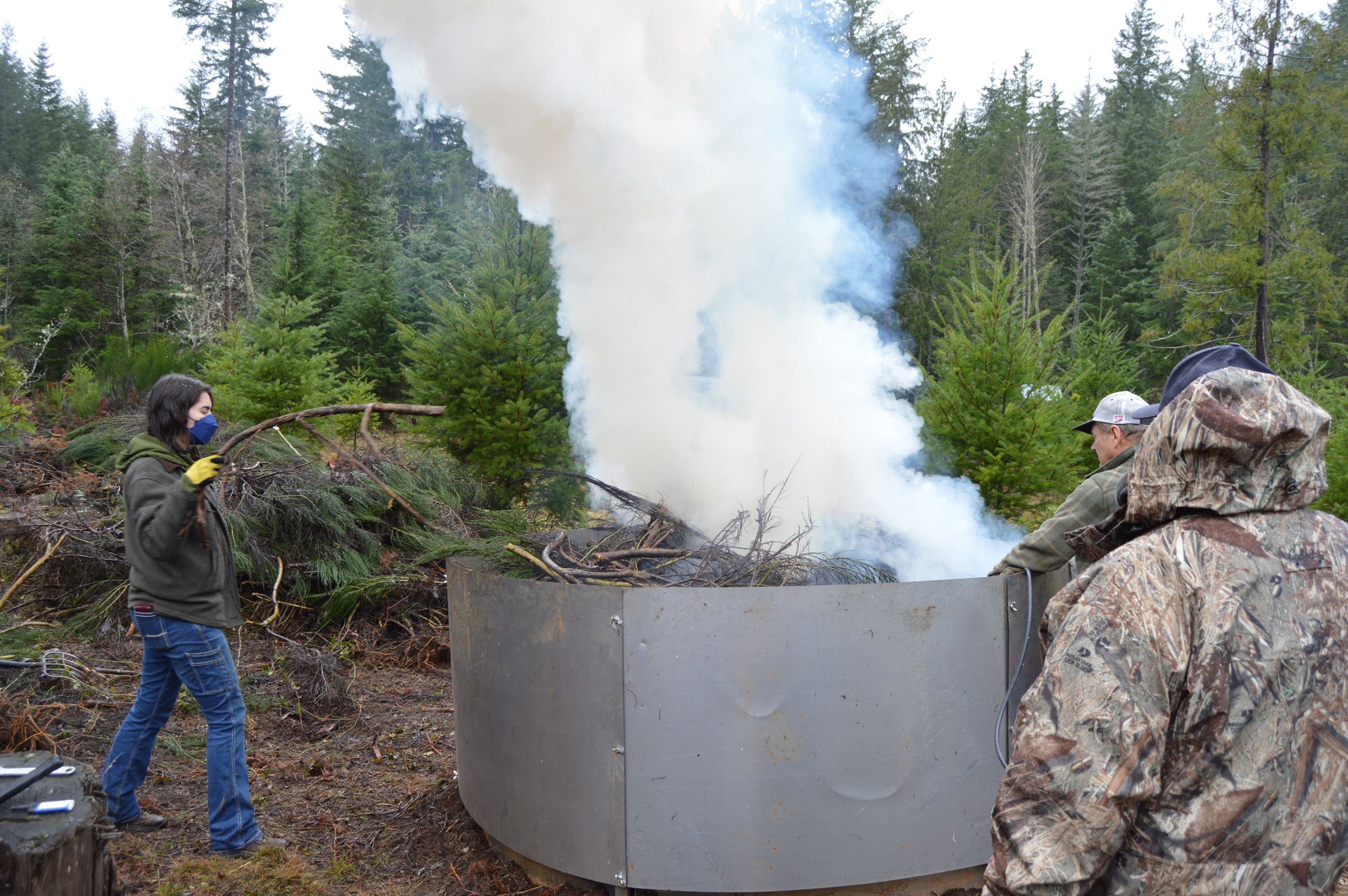
Three volunteers tending to the fire during a kiln demonstration in Ashford.
Biochar is a carbon-rich substance created from burning organic material in an environment in which oxygen is absent. This thermochemical process, called pyrolysis, requires a low-oxygen setting in order to lock in the carbon in the charcoal, rather than release it as carbon dioxide. Biochar makes an excellent soil amendment as it returns sequestered carbon back into the soil. Biochar can also change the pH of the soil depending on the ash content, but it is quite hard to exactly control this variable. Organic material burned, environmental conditions, and the temperature/duration of the burn are a few ways that can alter the pH of the biochar. Slash burns commonly used by farm and forest managers do not have the constant high heat and low oxygen for pyrolysis to occur, and most low-temperature fires have greater negative air quality effects. This is where a kiln is needed. A biochar kiln comes in many configurations and sizes, and they all accomplish the goal of maximizing heat while minimizing oxygen. Pierce Conservation District’s kiln was designed to be both easily transportable and simple to set up with 1-2 people.
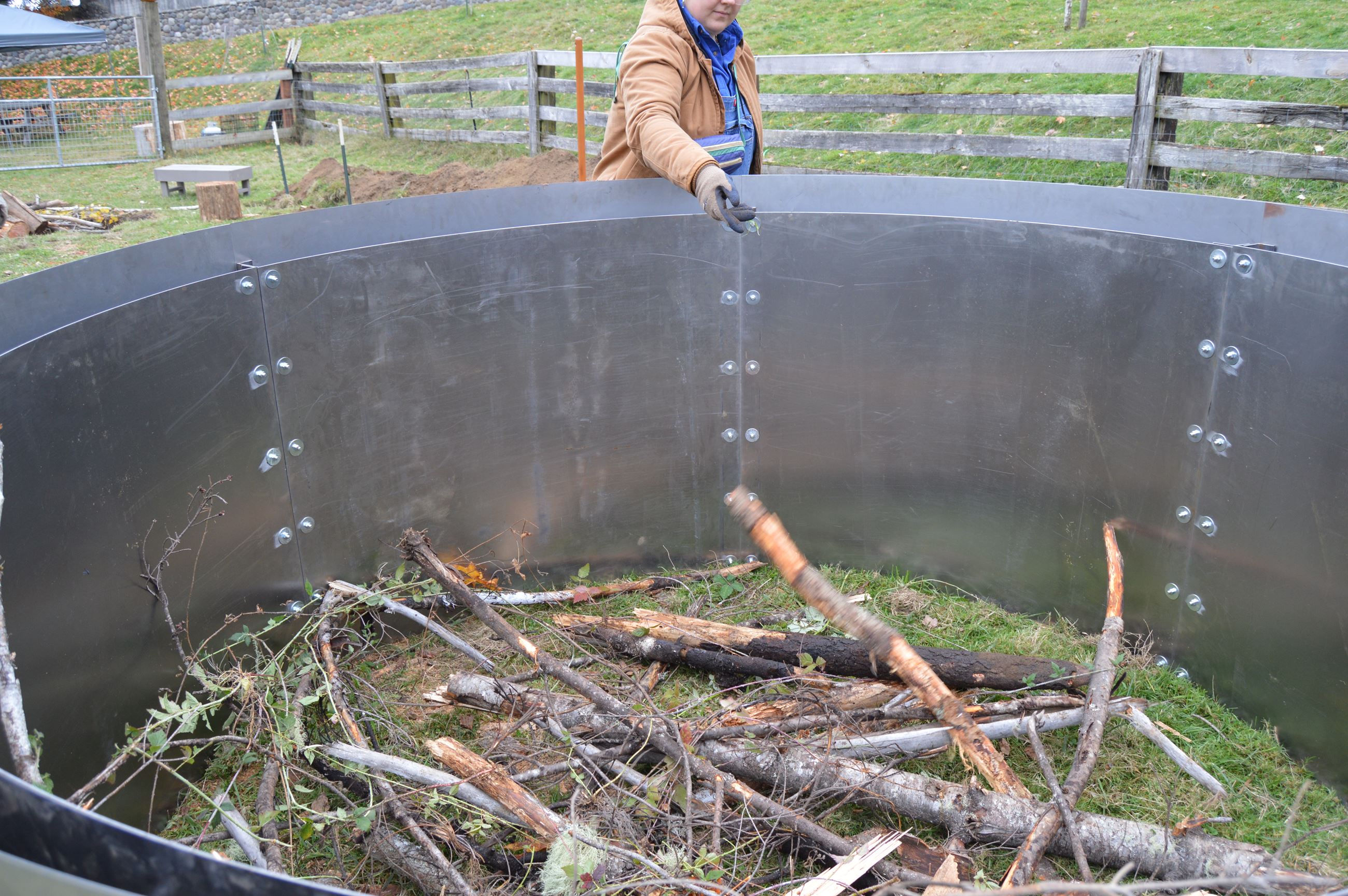
Biochar can be made from all kinds of organic materials- even some invasive plant species like Scotch Broom.
The kiln is constructed from a series of metal sheets, brackets, and bolts. When assembled, a large cylinder is formed, and it must be packed tightly with organic material. Any gaps at the bottom of the kiln must be covered with soil to prevent the entrance of oxygen. Some property owners have stockpiled invasive species they’ve removed, or they are looking to get rid of irregular pieces of wood. An upside to utilizing a biochar kiln is the flexibility in meeting a property owner’s needs. The important thing to keep in mind is that the organic material must be dry and initially packed in tightly to keep the ignition temperature high. After the top is ignited, then you can continually feed the kiln until it’s full of charcoal and can finally be quenched. Before renting the kiln, ensure all of the items on the “Biochar Kiln Safety Checklist” located on the rental program’s page are checked off, a burn permit has been obtained, and at least one kiln demonstration or equivalent has been attended.
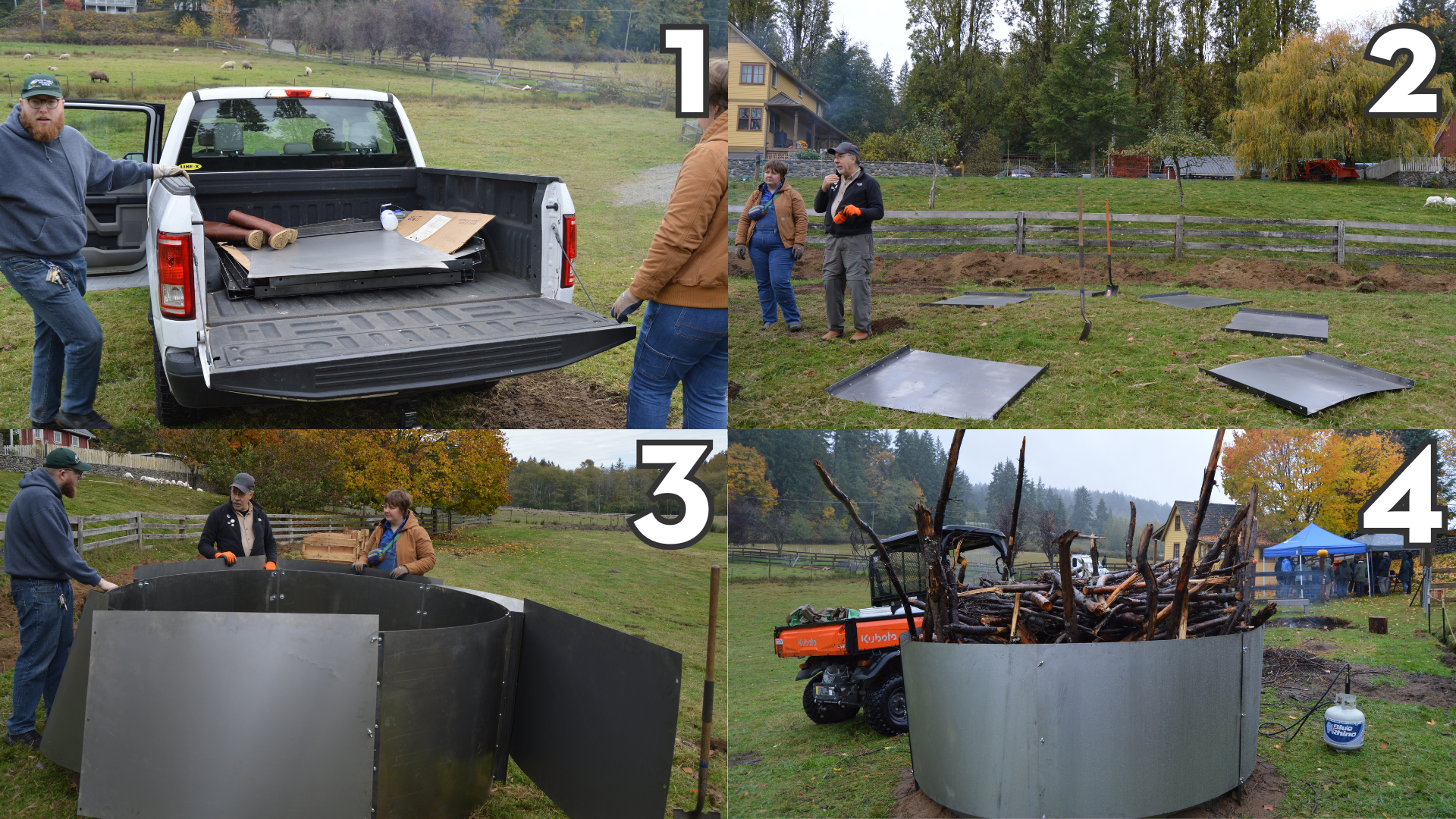
Assembling the biochar kiln.
If you want to rent Pierce Conservation District's biochar kiln, visit Biochar Kiln Rental Program | Pierce Conservation District, WA