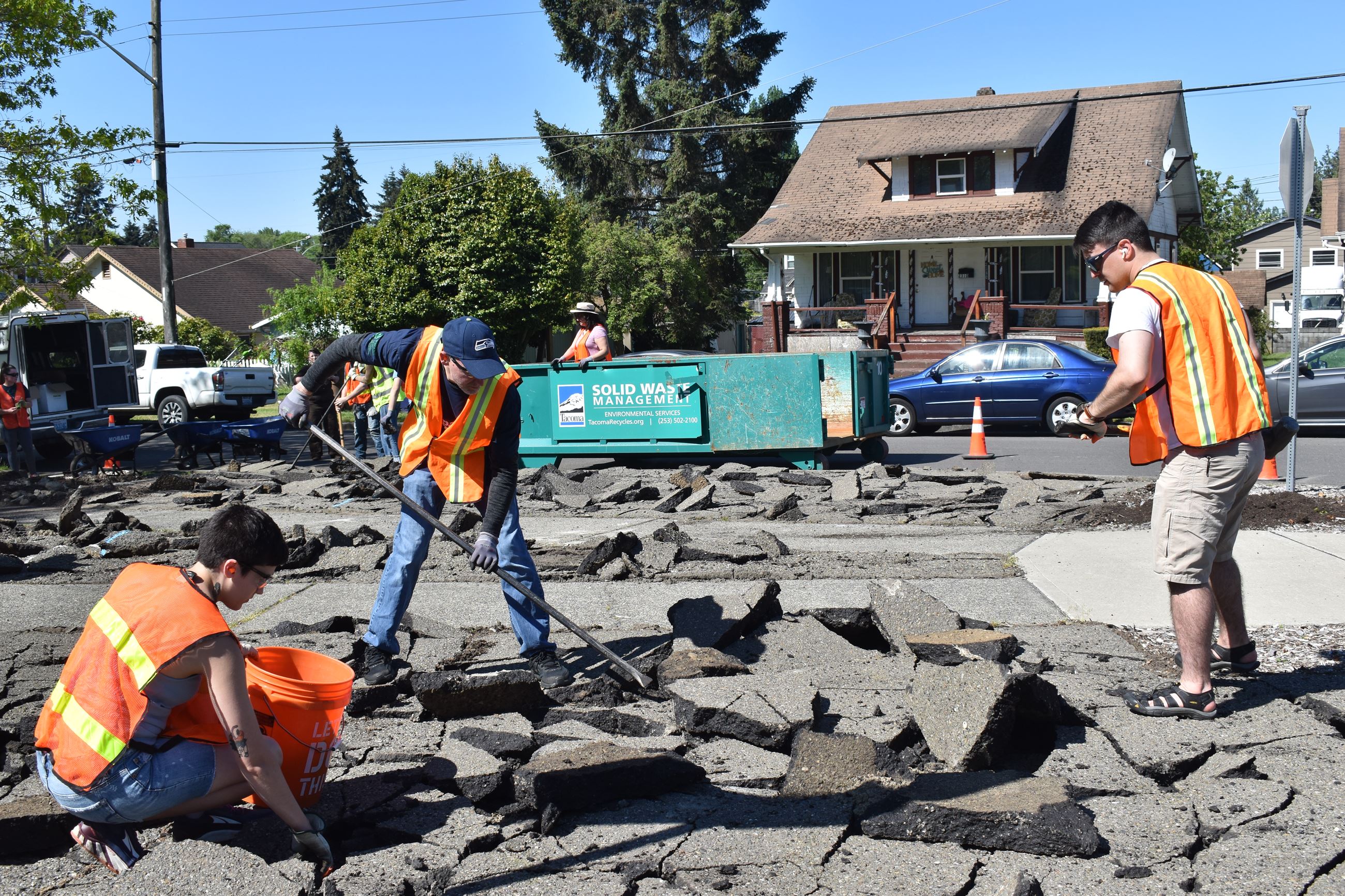
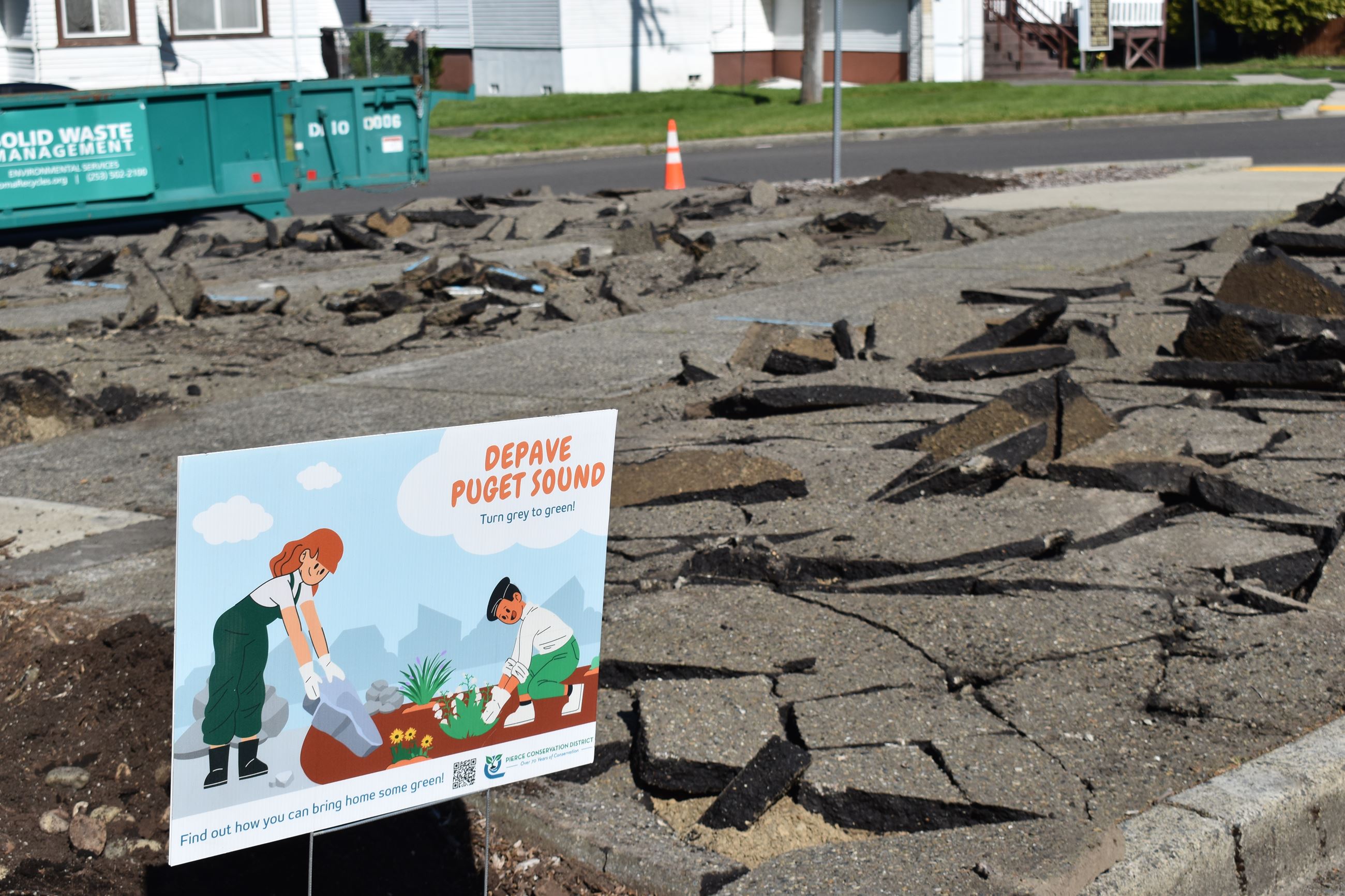
Last weekend, nineteen dedicated volunteers gathered with PCD staff and AmeriCorps in the Hilltop neighborhood in Tacoma to depave the north end of Grant Park. The project, proposed by nearby neighbors, removed 1,700 square feet of asphalt in preparation for a new garden to be planted in the fall. Formerly an unused space jutting into the middle of a three-way intersection, the “Triangle” will soon be home to new trees and native and pollinator-friendly plants that will offer a multitude of benefits to people, insects, and birds, and will help to improve the water quality of Puget Sound as a whole.
De-What?
Depaving is the act of removing pavement with the goal of replacing the pavement with a more environmentally friendly alternative. Pavement, which can be concrete, asphalt, or even compacted gravel, is an impervious surface. When water hits an impervious surface, it doesn’t soak into the ground. Instead, it flows along the path of least resistance, collecting sediment and pollutants like fertilizer, pesticides, herbicides, petroleum products, and heavy metals, among others. Tiny particles slough off of tires and release 6PPD-Q, a fatal substance to Coho salmon and highly toxic substance to other forms of aquatic life. This noxious stormwater slurry isn’t treated after it flows into storm drains; instead, it’s dumped via series of outfalls directly into Puget Sound.
When areas are depaved and replaced with either vegetation or permeable pavement, rain and flowing stormwater are intercepted and infiltrated deep into the ground, replenishing groundwater stores and nourishing plants and trees.
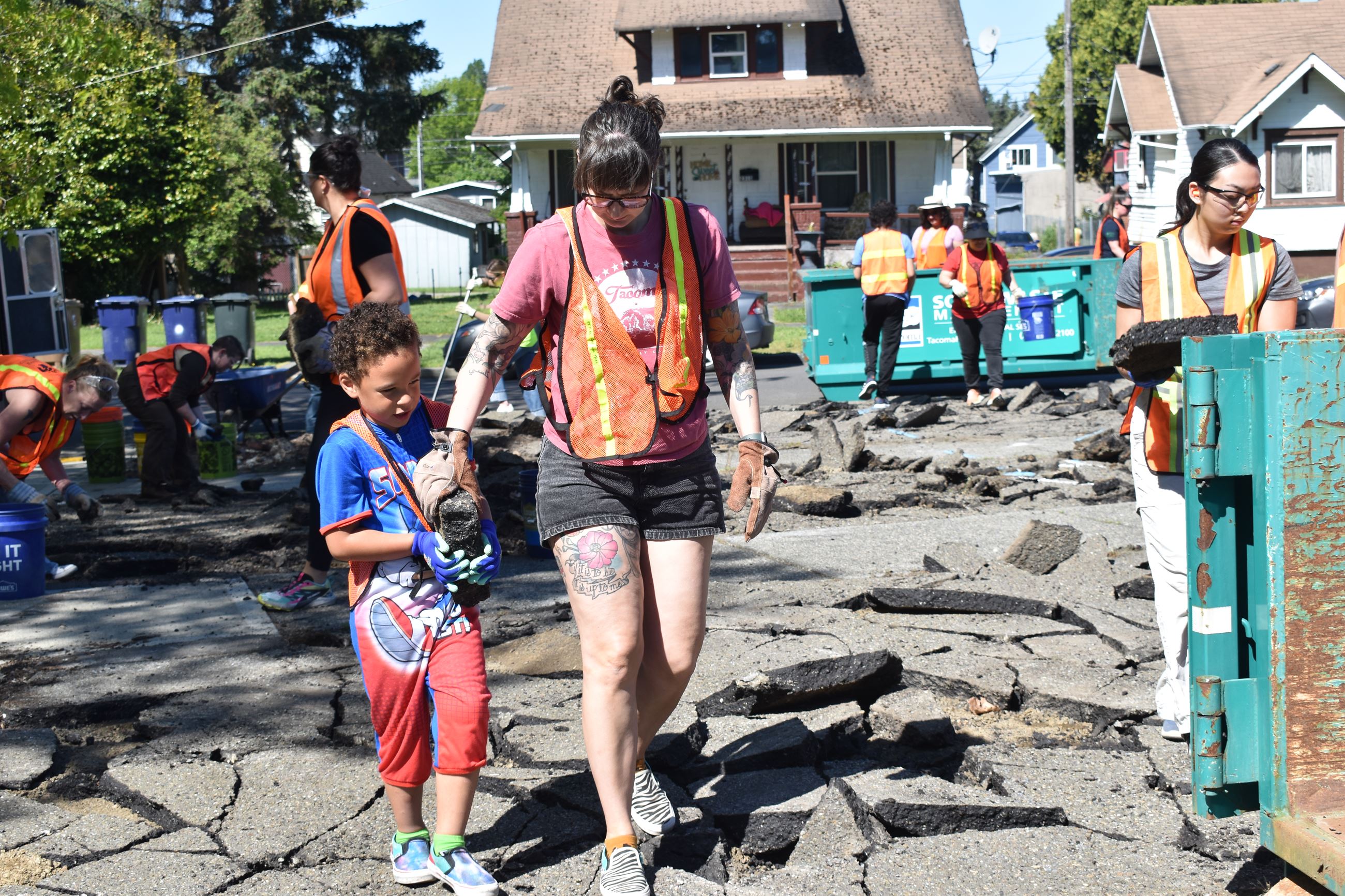
Neighbors of all ages gathered together to depave the "Triangle" at Grant Park.
Urban Heat Island Effect
Environmental issues are also social justice issues, and excess pavement is no exception. Pavement absorbs heat, making the air around it hotter. Neighbors of the Triangle Depave noted that when walking through the park, they felt waves of heat coming off the paved area.
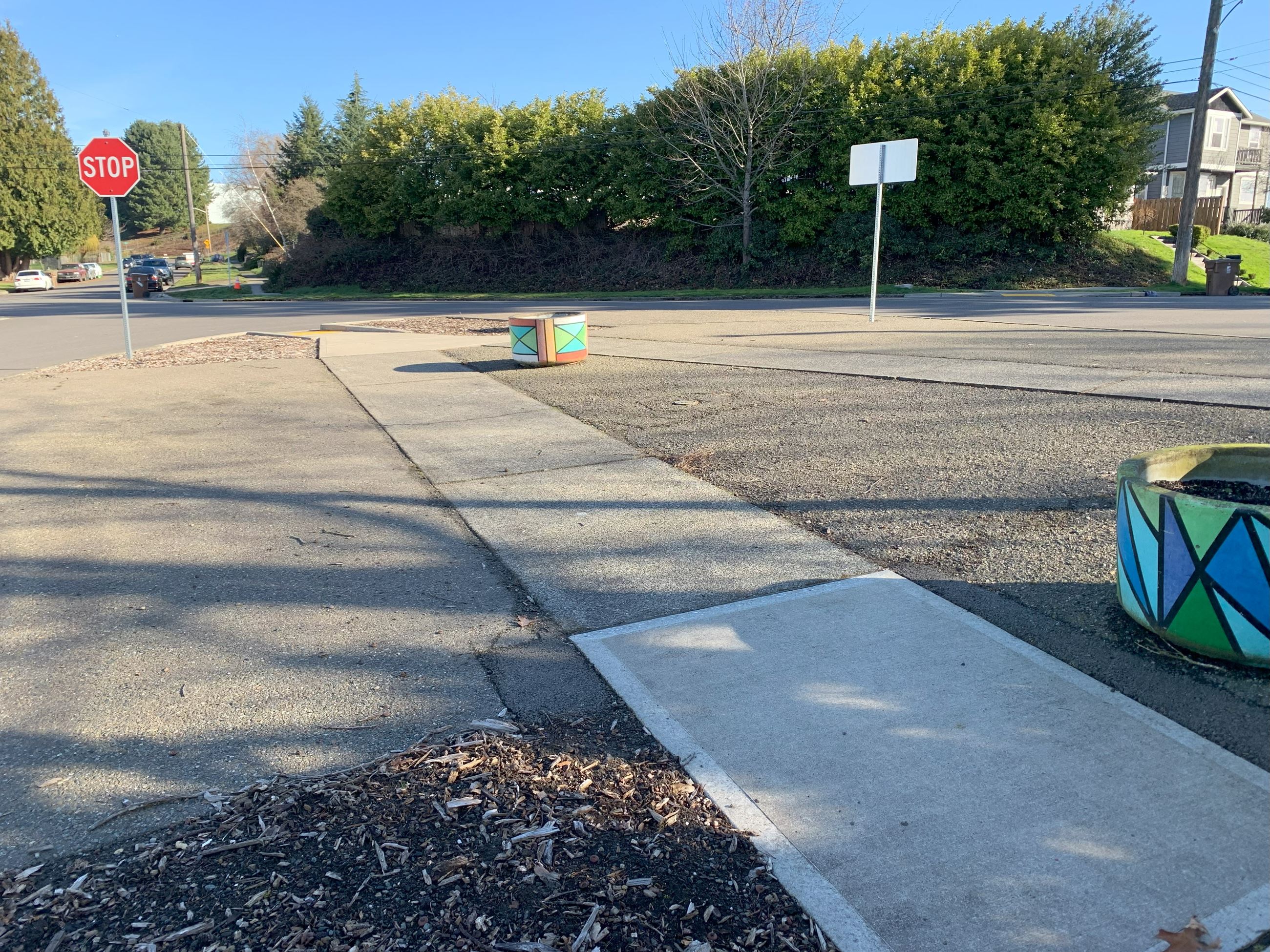
This space at S Grant Ave & S Alaska in Tacoma has been paved over for at least twenty years.
This effect is compounded by lack of tree cover. Trees not only provide shade, but they also release water vapor back into the air via transpiration, cooling the air around them. Tacoma has the lowest tree canopy of any city in Western Washington, and the areas most affected by the lack of tree canopy and presence of large amounts of pavement are also the most underserved communities, many in historically redlined areas like Hilltop.
Depave Tacoma
Depave Tacoma is a partnership between the City of Tacoma and Pierce Conservation District that aims to reduce impervious surfaces and increase green space. Through this program, anyone can nominate an area in Tacoma to be depaved, provided it drains to the public right-of-way. (If you’re not sure what this means, PCD staff will be happy to discuss your project ideas to see if it’s eligible!)
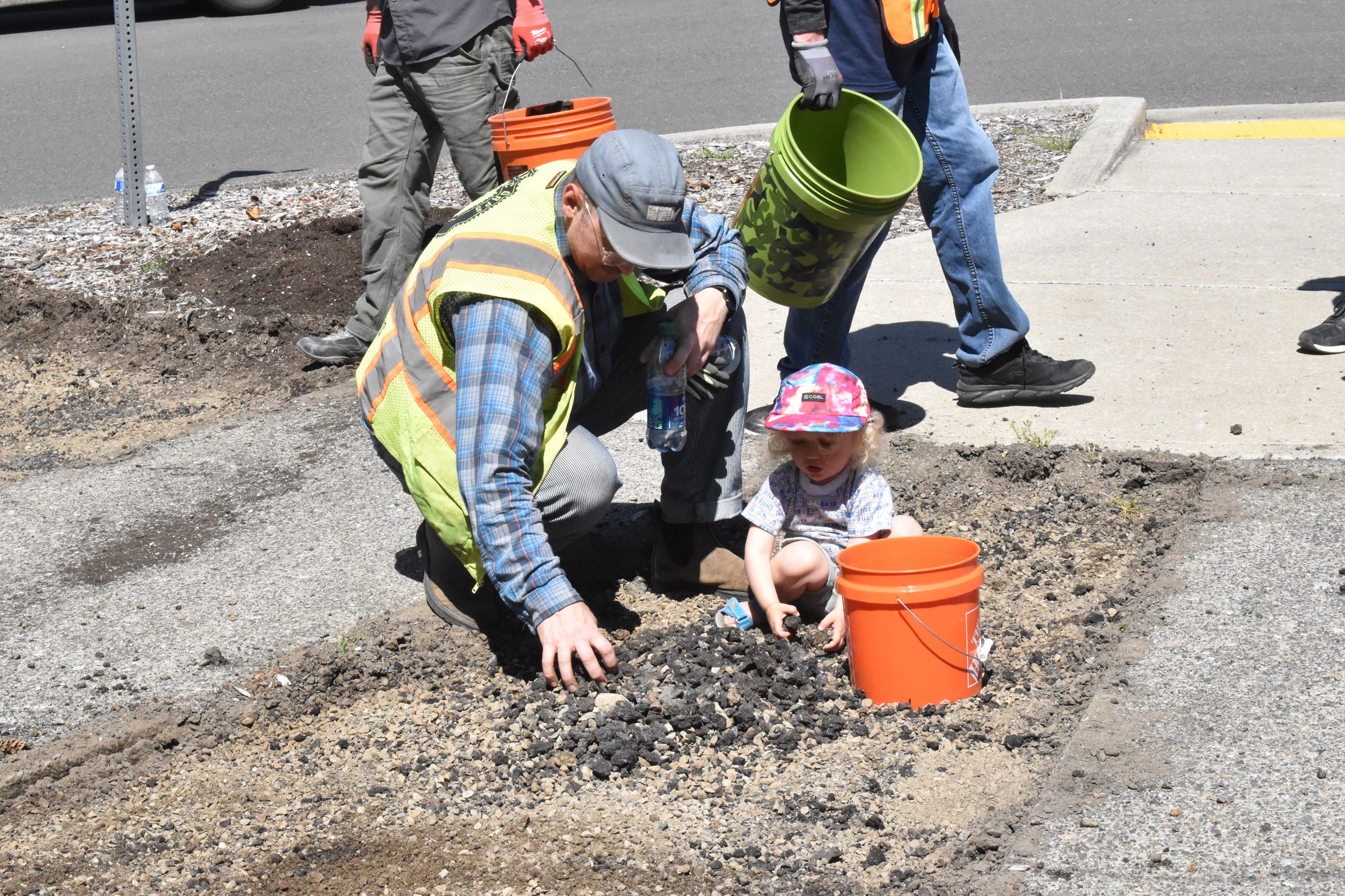
The youngest depave volunteer carefully separates out asphalt from gravel to be recycled later.
The City of Tacoma provides free dumpsters for approved projects and breaks up the pavement into large chunks using heavy machinery. PCD then coordinates a volunteer event to further break down the materials and manually separate them so they can be recycled properly. After the volunteer day, the City crews come back in to finish the free site prep, including removing any compacted gravel, spreading TAGRO topsoil amendment, and laying several inches of thick woodchips to suppress weed growth and lock in soil moisture.
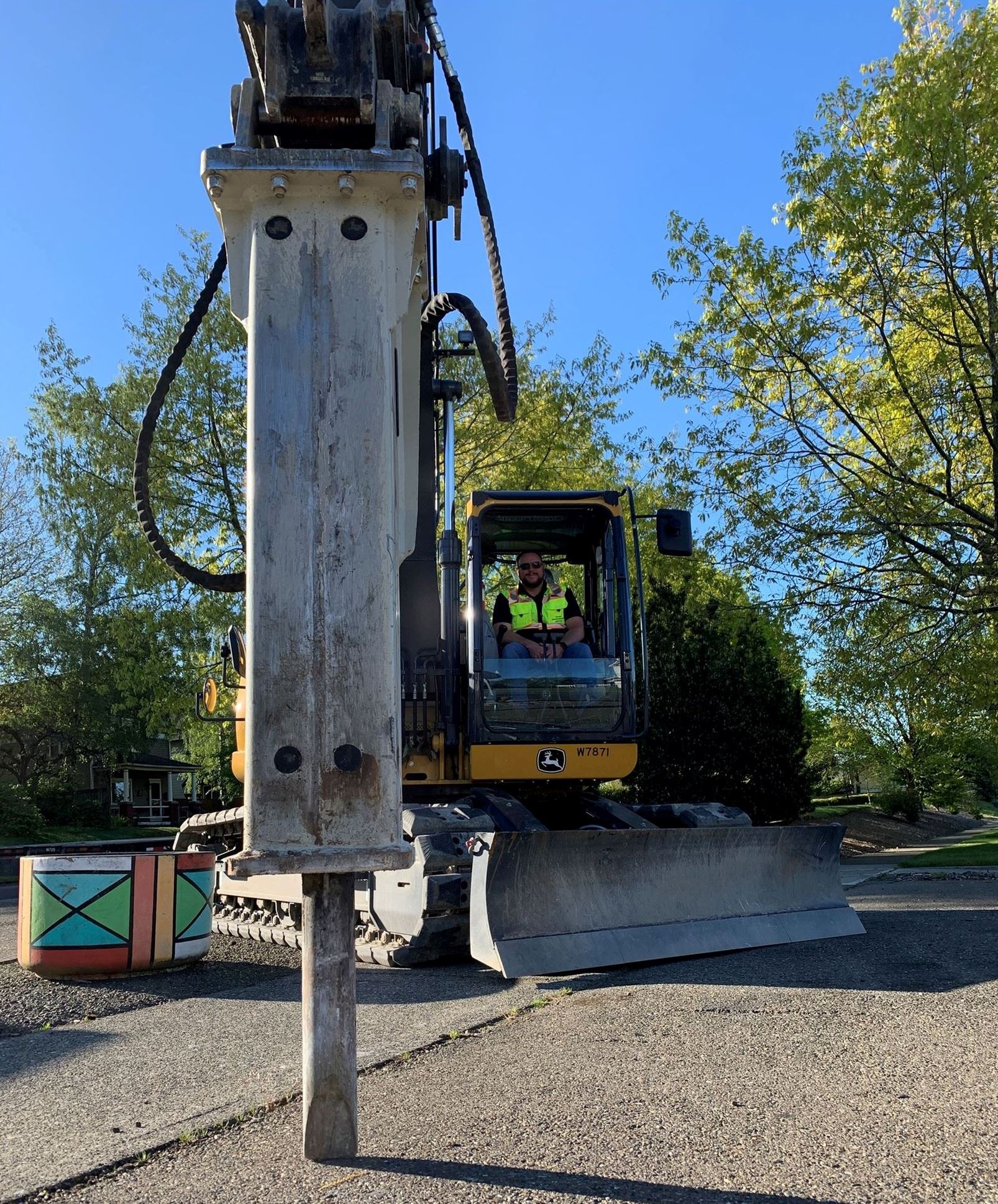
A City of Tacoma crew prepares to jackhammer the asphalt into moveable chunks.
PCD provides the landscape design with community input, and a planting day is scheduled for the fall. The two volunteer events for asphalt removal and planting are open to all ages and can be a great way to meet new neighbors and other people who are passionate about building new green spaces.
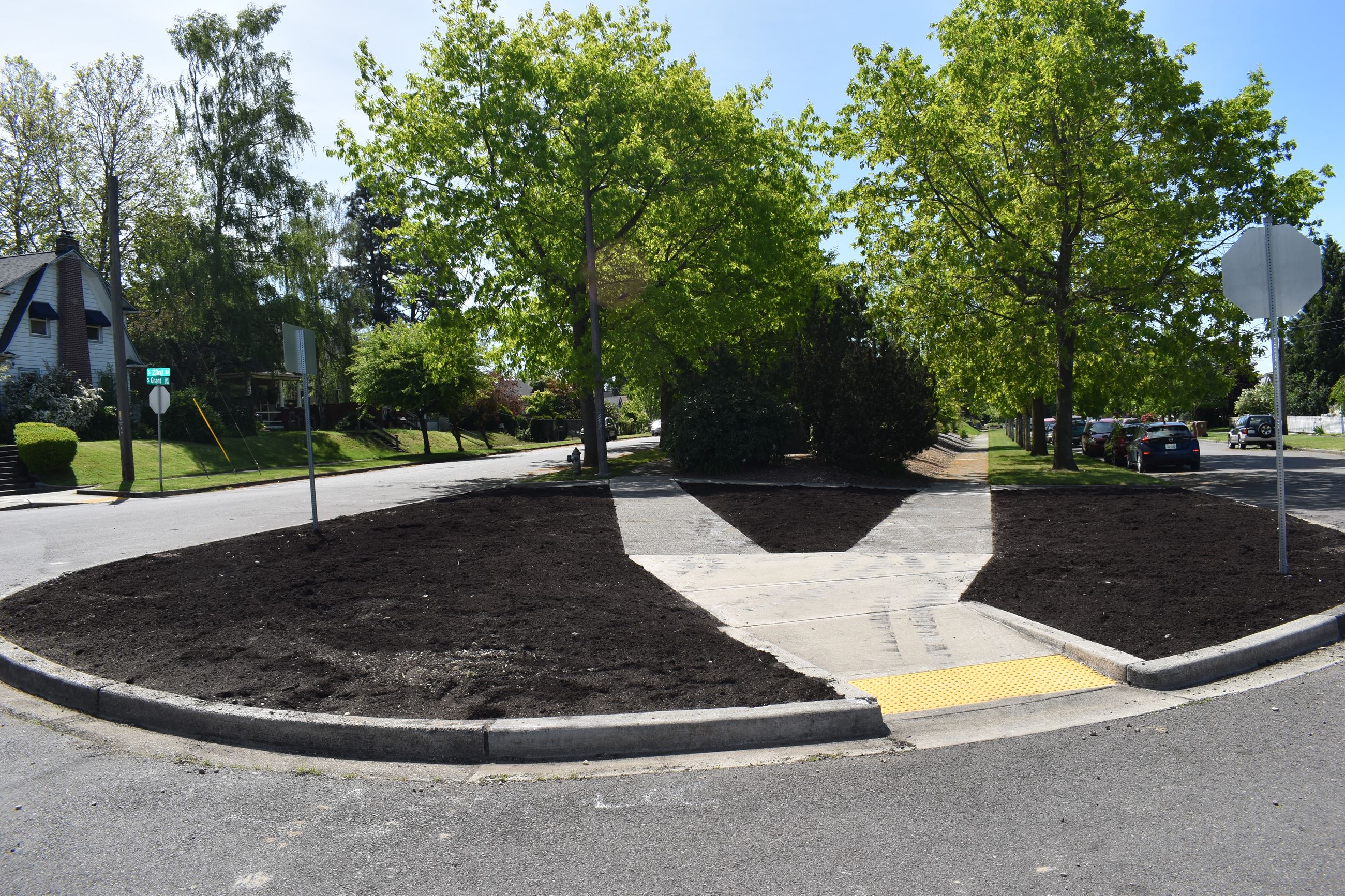
TAGRO is added to amend the existing soil before mulch is applied.
Green Stormwater Mini Grants
The neighbors who proposed the Triangle Depave project received one of PCD’s annual Green Stormwater Mini Grants for 2024. Through these cost share grants, anyone living within priority watershed areas is eligible for up to $4,000 to offset the cost of installing a rain garden, rain tank, or converting pavement or lawn to a flourishing urban wildlife habitat area.
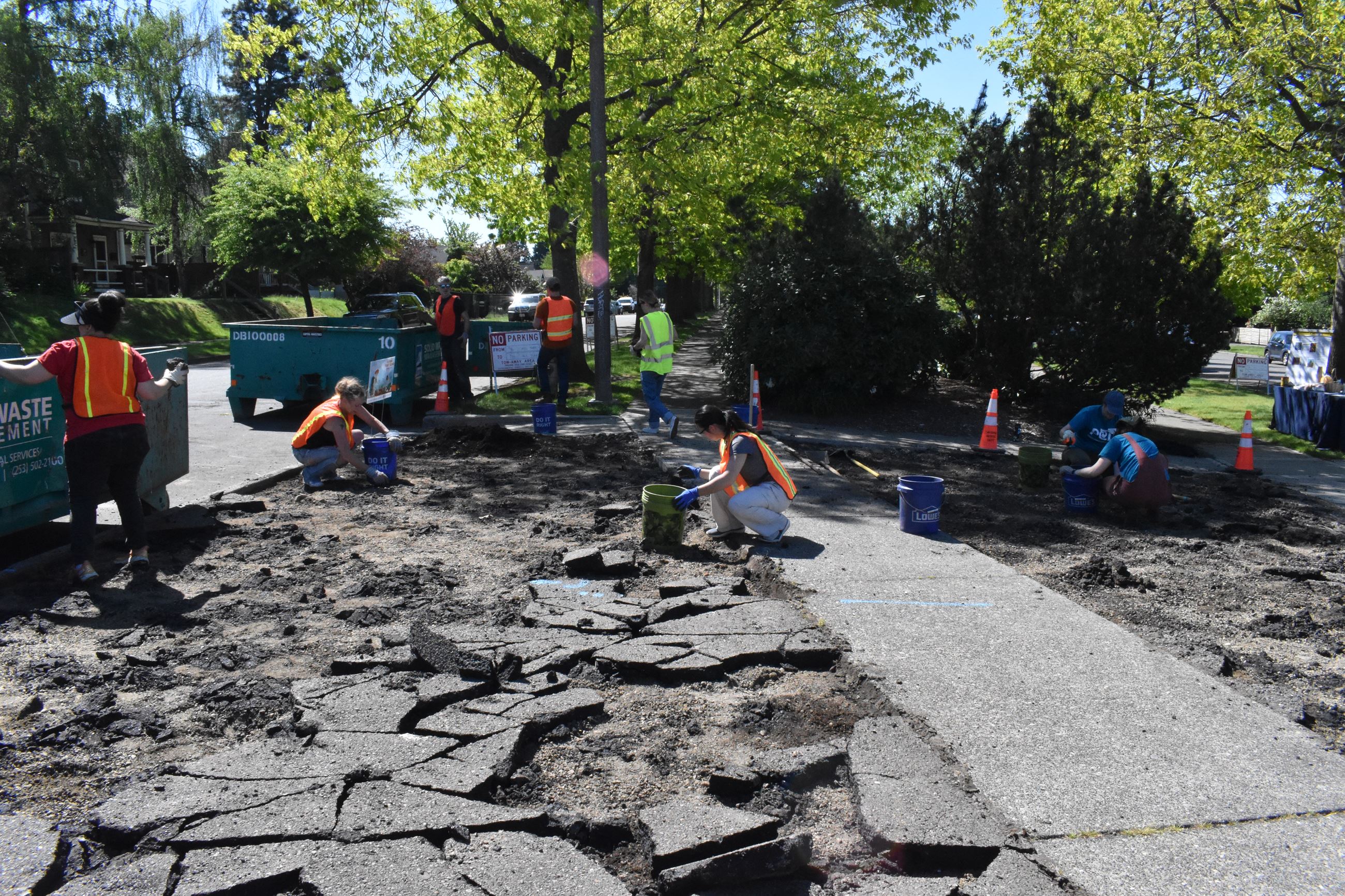
Most of the large pieces of asphalt have been moved after only an hour of work.
This year our twenty mini grant recipients incorporated five depaves into their projects. The depaved areas range from small, simple DIYs, like a front walkway, to medium sized projects like back patios, to large volunteer events involving complex coordination between multiple stakeholders, like the Triangle Depave. Big or small, each depave project goes a long way to keeping Puget Sound healthy by reducing the amount of polluted stormwater that flows through the streets, into storm drains, and directly out to Puget Sound. Read on to learn about PCD’s other featured depaves this year and how you can get involved in turning your space from gray to green.
Small Depaves - Big Impact
Four other Green Stormwater Mini Grant projects involved depaving this year. PCD joined forces with the Northwest Youth Corps to depave two front walkways and spread burlap and mulch over one yard where pavement and lawn had been removed, all while teaching the next generation of environmental professionals this valuable (and very fun!) skill.
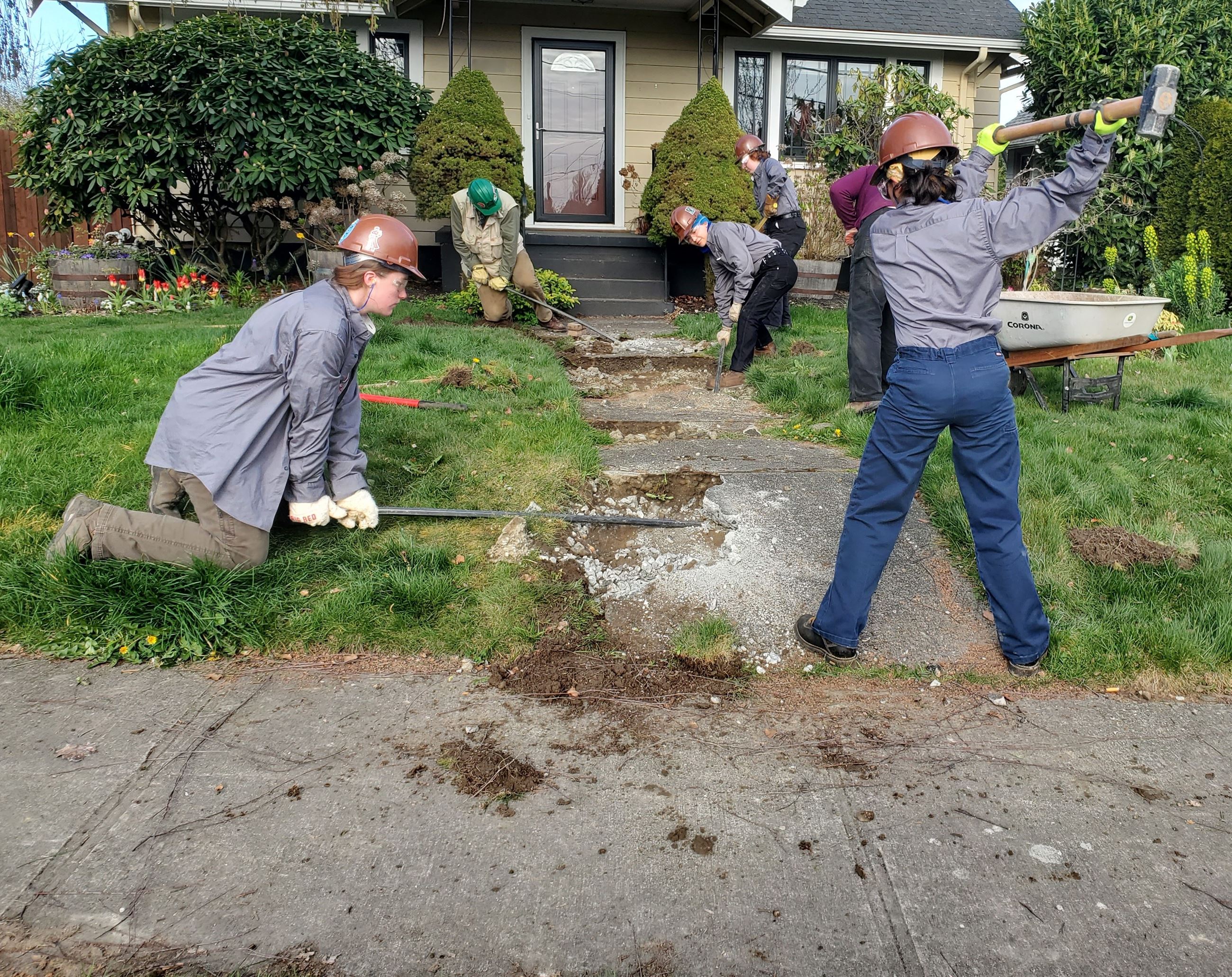
Northwest Youth Corps members demonstrate excellent sledgehammer and rock bar form.
One special project is connecting a small community of neighbors even closer together. This small concrete back patio serves as the neighborhood gathering space for meals and fellowship, but the paved space is hot in the summer and dreary in the winter. Moreover, it has a stormdrain directly in the center of the paved area. A contractor was able to maneouver specialized equipment through the narrow alleyway and cut the area into a grid of concrete “pavers.” Later this summer, the neighbors will come together in a PCD-led event to manually break up the concrete into smaller pieces to be recycled into a dumpster, and then to amend and prep the soil in preparation for planting their new communal garden space later this year.
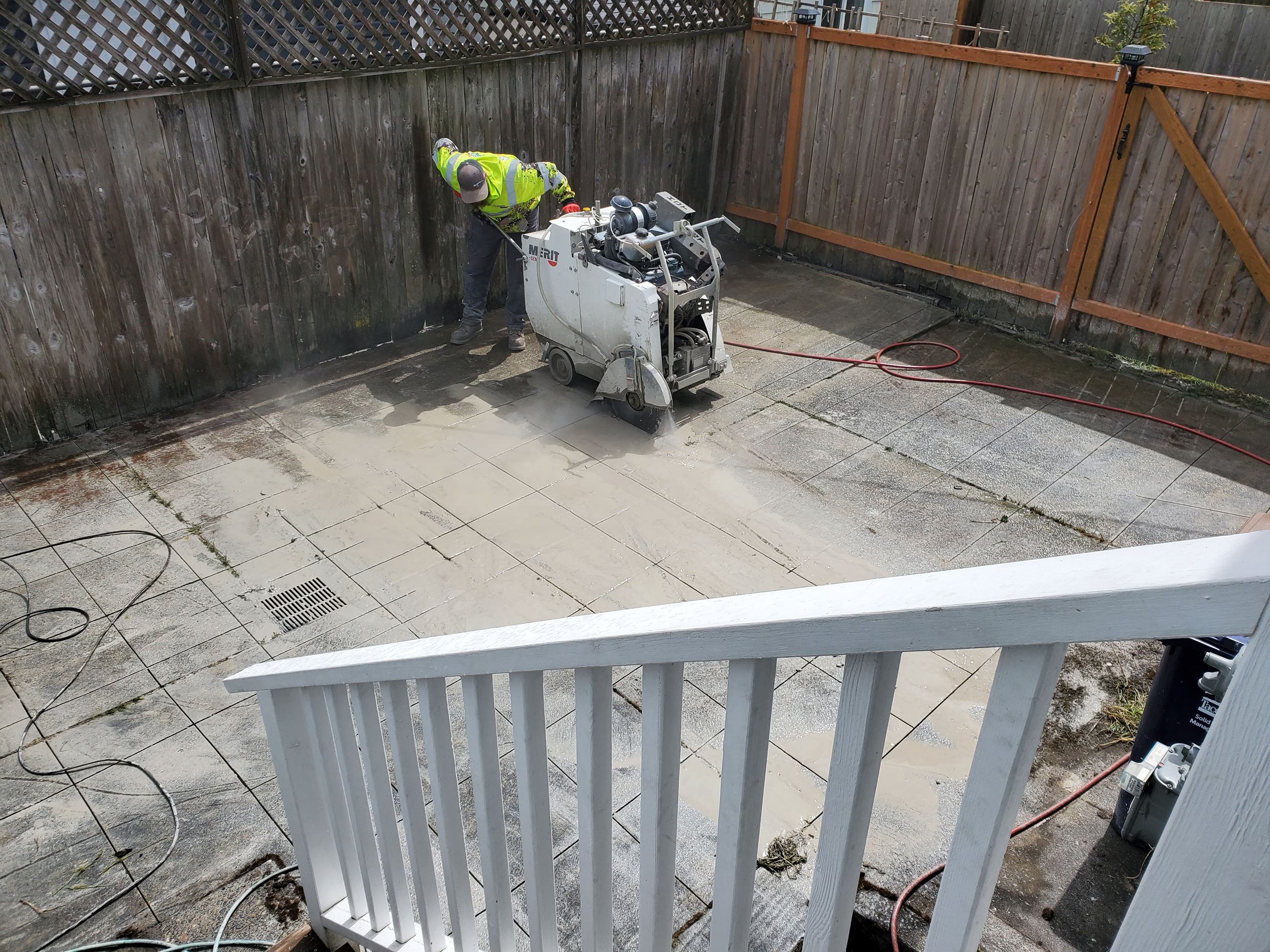
A concrete saw cuts a patio into smaller pieces which will be broken up later by volunteers.
Together, this year’s Mini Grant depaves will help infiltrate 62,600 gallons of stormwater into the ground instead of running off into Puget Sound, proving that small depaves can play a big role in improving local water quality.
Are You Ready to Depave?
If you have a space you’d like to see depaved, fill out the nomination form here.
To stay up-to-date with PCD’s Green Stormwater team, sign up for the Waterwise newsletter here.
Click here to learn more about PCD’s Depave program and to find resources. Information about how you can get a Green Stormwater Mini Grant can be found here.