Summer is here and many of us
enjoy spending time outside boating,
kayaking, and fishing in local lakes
and streams. The downside to these
activities is the unintentional spread
of aquatic invasive animals and plants.
These invaders are an ongoing threat
to our environment and are costly to
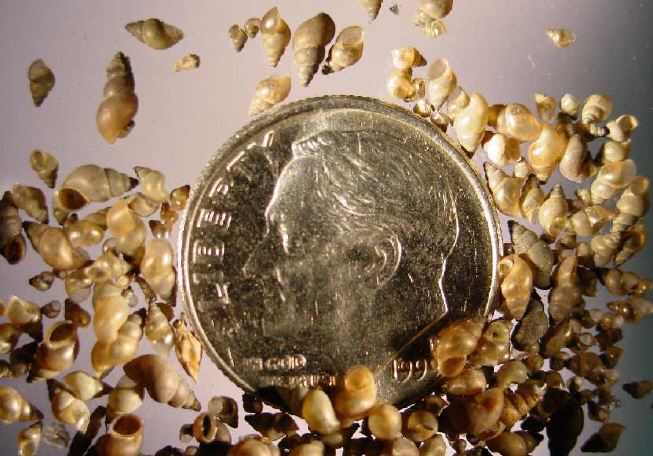
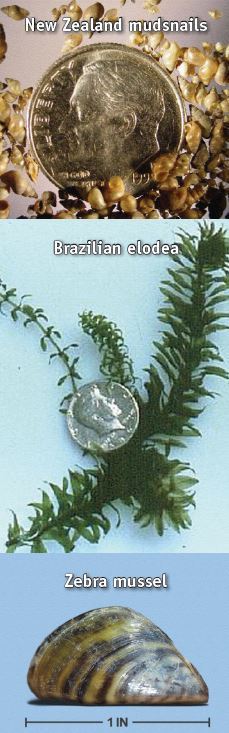
remove once established. Zebra and
quagga mussels, New Zealand mudsnails;
and aquatic plants such as Brazilian elodea,
Eurasian milfoil, and hydrilla are
some examples of these aliens. Each of
these can be easily and unknowingly
transported between lakes and streams
on boats, trailers, and fishing gear.
Why are these invaders so bad? None
of these species are native to this area.
Many of the aquatic invasive plants
Alien Invaders Are Lurking
were originally sold as aquarium plants;
and the invasive mussels and snails
have arrived on boats/equipment.
Because they didn’t evolve here, there
are no natural checks and balances to
keep them under control so their populations
explode taking over and outcompeting
our native plants and animals.
The most important action we can
take to control the spread of these
aquatic invaders is to carefully clean
our outdoor recreation gear using
either the “Clean/Drain/Dry” method
or the more thorough decontamination
method which is recommended
for those waterbodies that are known
or suspected of being infested. For
more information on how to prevent
the spread of these invaders go to
the Washington Department of Fish
and Wildlife’s aquatic invasive species
page (
http://wdfw.wa.gov/ais/).
Macroinvertebrate Sampling
Benthic macroinvertebrates
(bottom-dwelling organisms
including aquatic insects, crayfish,
clams, snails, and worms) are often
used in studies to determine the
quality of waters because of their
high numbers, known pollution
tolerances, limited mobility, wide
range of feeding habits, varied life
spans, and dependence on the land
environment around the stream.
While water quality sampling
provides us with a “snapshot” view
of the health of the stream; macroinvertebrates
give us with a longer
view of stream health. The types
and numbers of macroinvertebrates
present are affected by periodic
episodes of poor water quality or
by ongoing poor water quality.
Become a Volunteer
During summer volunteers help
us collect samples of these
aquatic organisms from selected
streams which are sent to a lab
to be identified and counted.
Pierce County uses the results to
determine biological health of
the stream. If you are interested
in lending a hand with sampling
this summer, contact Isabel
Ragland at (253) 845-9770 x103
or
isabelr@piercecountycd.org.