by Laura Wagner
After months of being raised from coho egg to fry, these fry adventurers are ready to boldly go where their family has gone before!
Through the hard work and collaboration between the White River School District and Pierce Conservation District, over 300 third graders experienced their first year of immersive salmon curriculum with Pierce CD. The students used hands-on learning to observe the Pacific Salmon life cycle within their local watershed and within their classroom.
Last year they joined us at South Prairie Creek Preserve to plant trees and observe salmon habitat. Then they raised coho salmon from eggs to alevin to fry in their classroom this winter. For the grand salmon-raising finale, they released their fry into Wilkeson Creek this spring and participated in salmon themed educational activities!
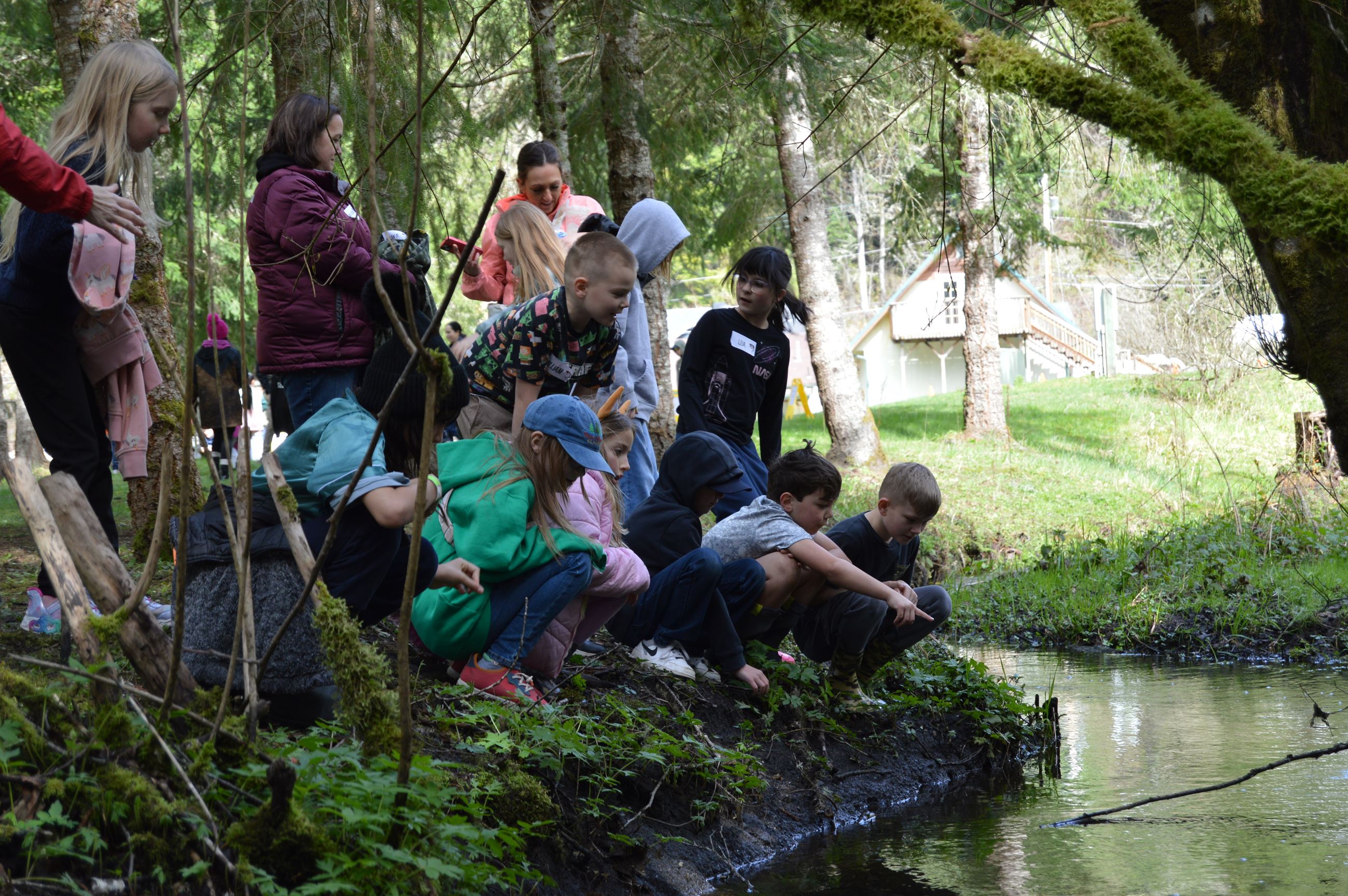
Students crouch by Wilkeson Creek to spy their coho fry
The students navigated four activities that showcased a salmon’s journey to the open ocean and back to home stream: their final frontier.
Salmon Scents
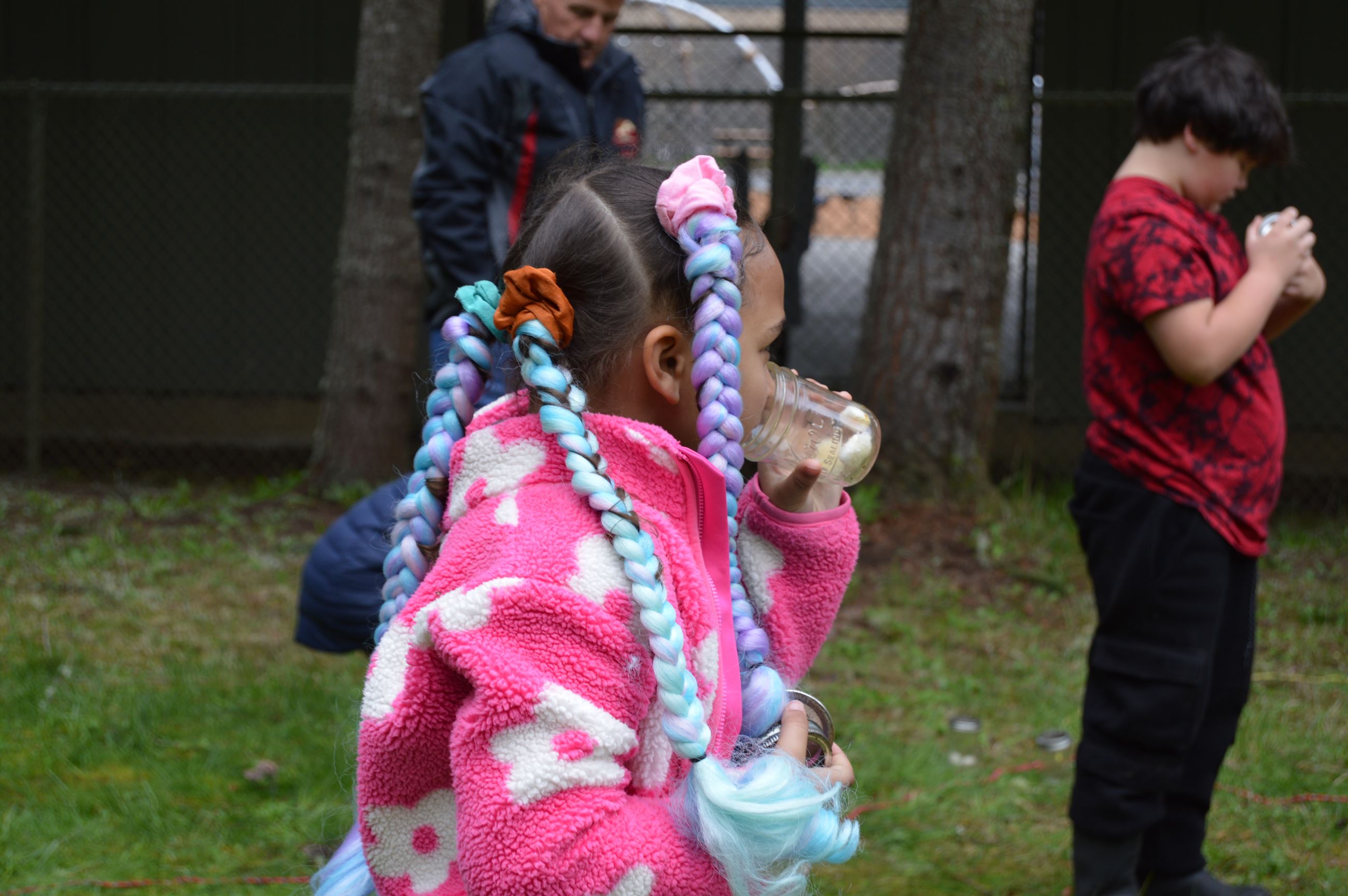
Students participate in a "Salmon Scents" field trip game.
As fry, salmon memorize the smell of their home stream’s water so they can return to the right place to spawn. Pacific salmon smell their way home!
The third graders tested out their ability to remember a specific smell and track it across a “watershed” of other scents. They started at a jar containing one distinct smell, such as lavender, then they followed that scent across ropes of fake streams to find the right scented pathway home. It was tricky business to remember the scent!
Many third graders reflected about how it would be even harder for salmon to remember their home stream if confusing things like pollution or dog poop were added to the water.
Macroinvertebrates
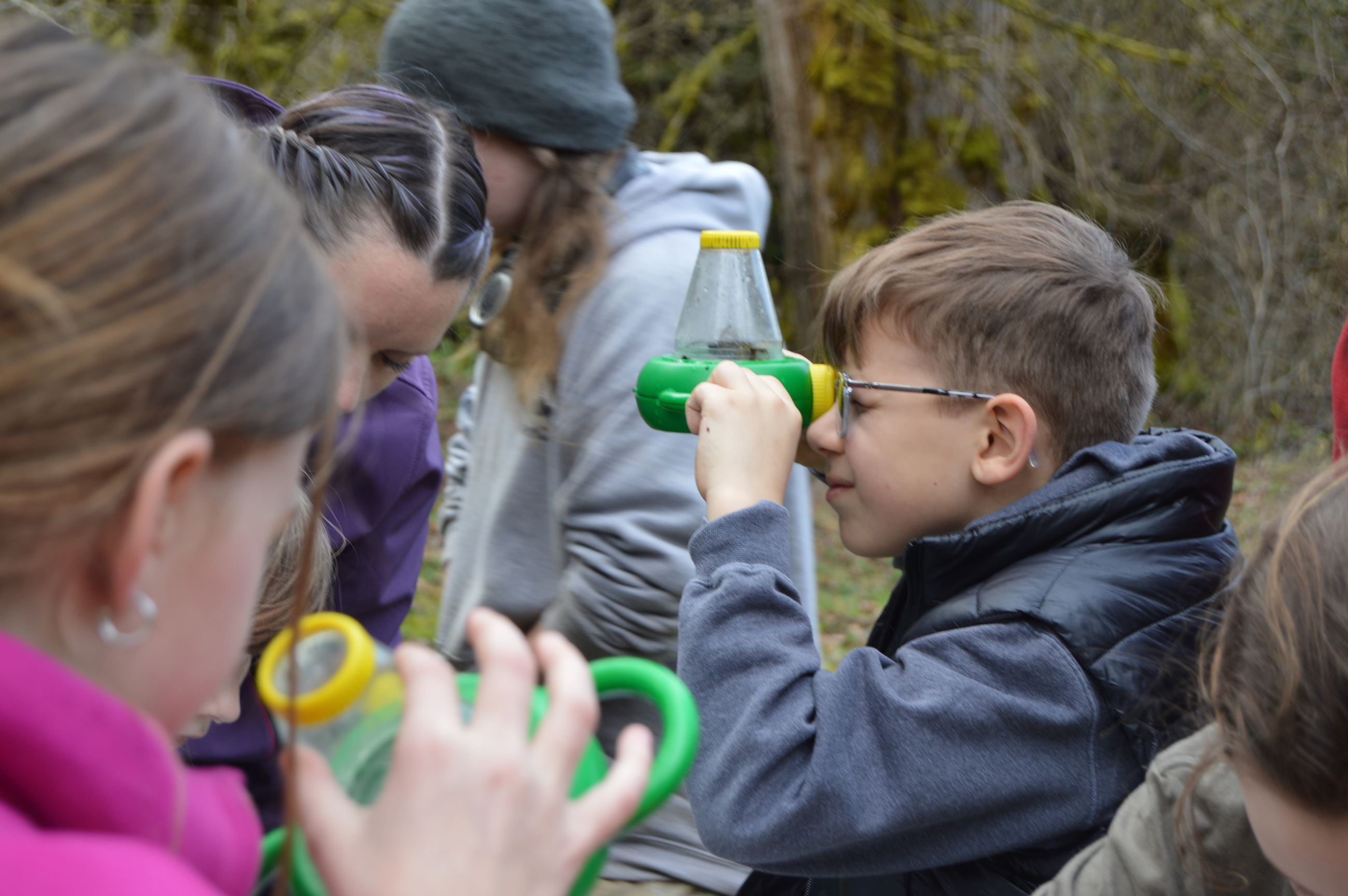
Students use green viewfinders to look up close at macroinvertebrates
You can’t release salmon without learning about aquatic macroinvertebrates! These creatures are tiny, but not microscopic, organisms that live in the streambeds. They are the first food source for salmon fry navigating freshwater, so their presence in salmon habitat is incredibly important. The students looked at macros up close using handheld microscopes and identified which species could be found in Wilkeson Creek. The diversity and size of the macros they found revealed that their fry have plenty to eat in the creek!
Salmon Obstacle Course
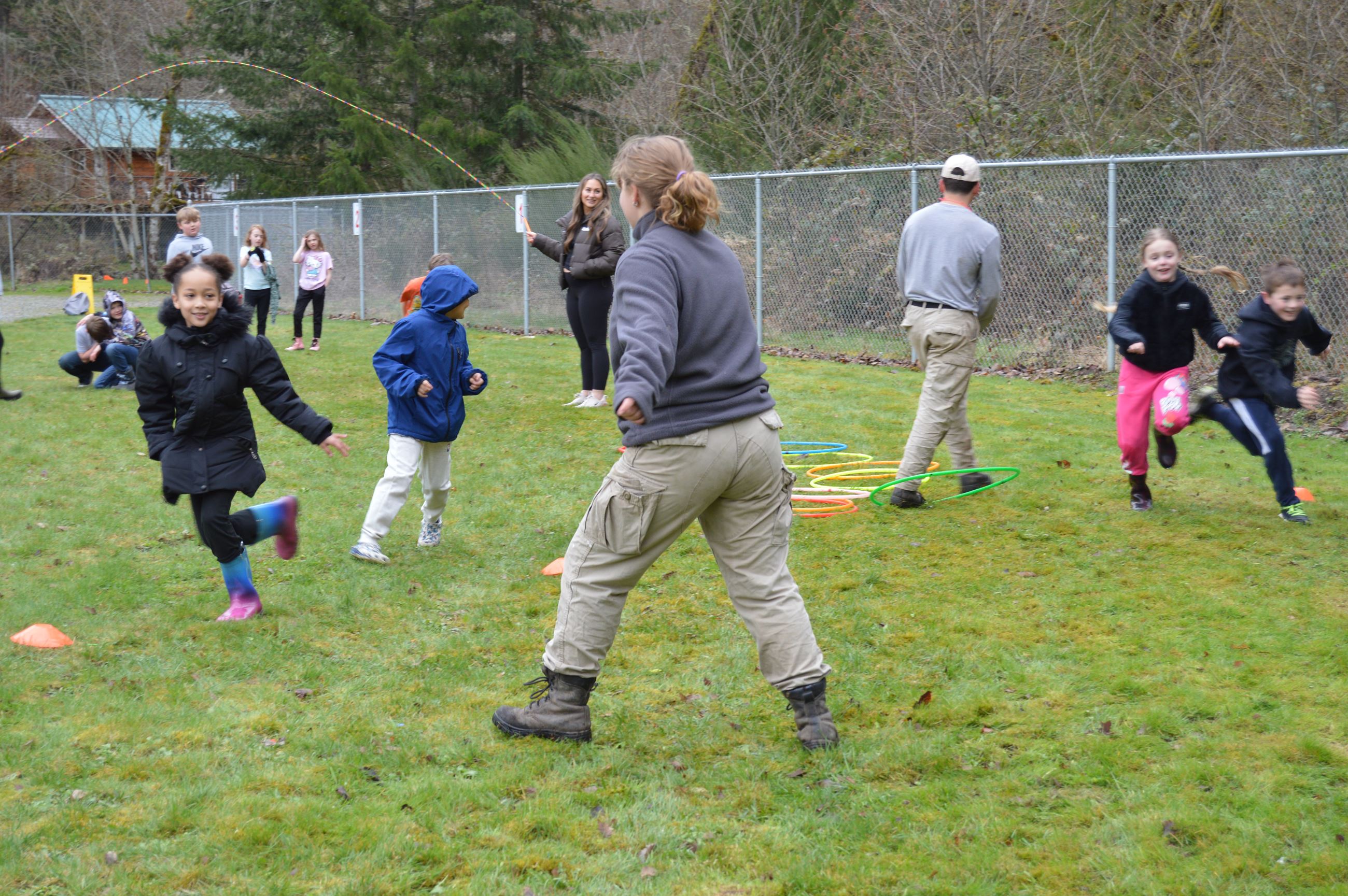
Students run, jump, and dodge their way through this salmon migration obstacle course
At the next station, the 3rd graders tested their luck surviving the many obstacles salmon experience during their lives at the salmon obstacle course! From physical barriers like dam turbines (the jump rope) to predators like a hungry bear (a very enthusiastic teacher), the students experienced first-hand how difficult it can be to survive as a migrating salmon!
Salmon Release
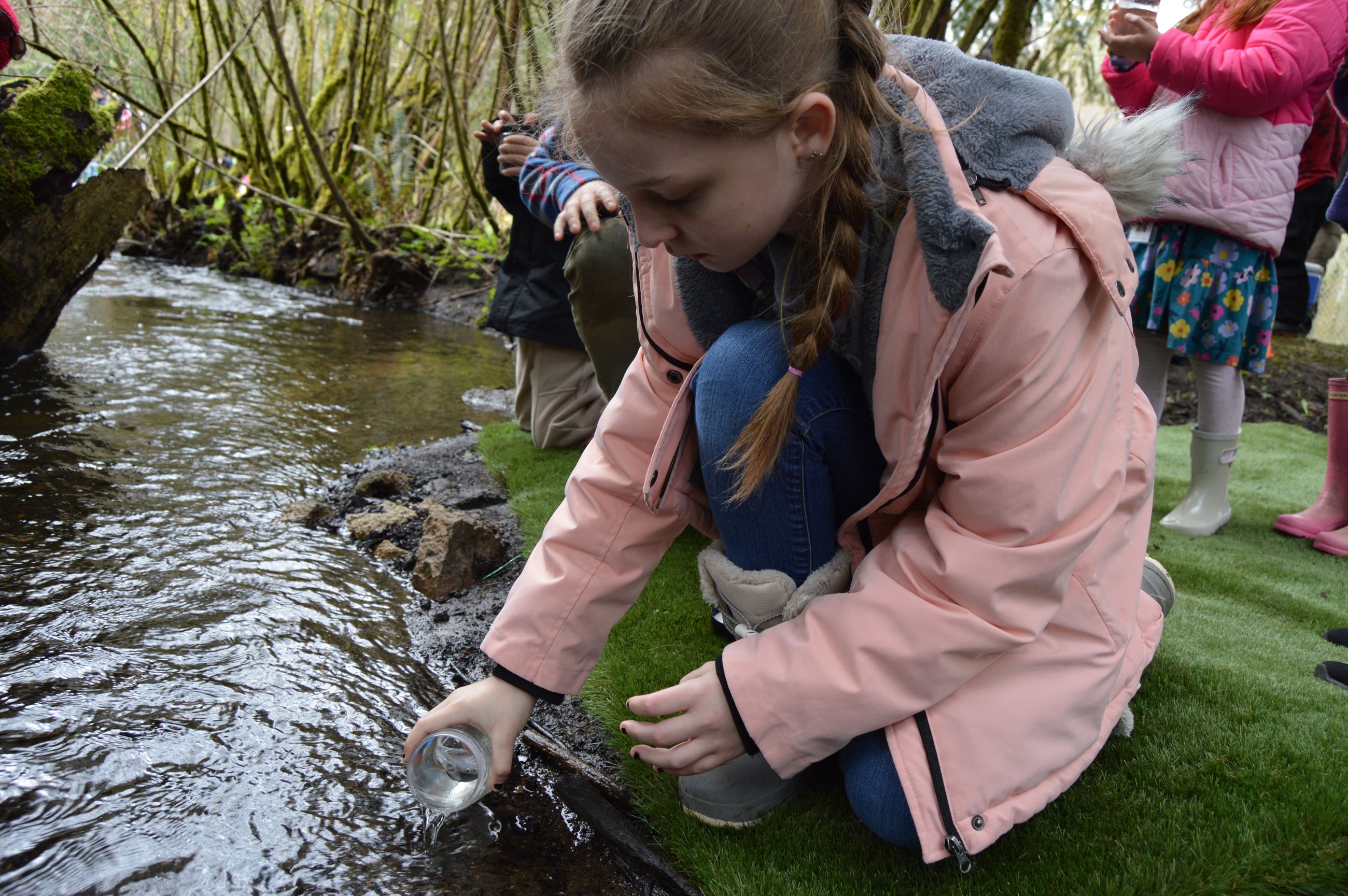
A student releases her salmon fry into Wilkeson Creek
Finally, the students said farewell to their beloved fry, releasing them into the waters of Wilkeson Creek. Though it was hard to say goodbye, the students knew that their fry need to live out the rest of their lives out in the wild to experience every stage of their life cycle.
Coho spend two years in freshwater before making the journey out to the ocean, so for now they have a healthy stream full of tasty macroinvertebrates to get big and strong for migration.
I-Spy Fry!
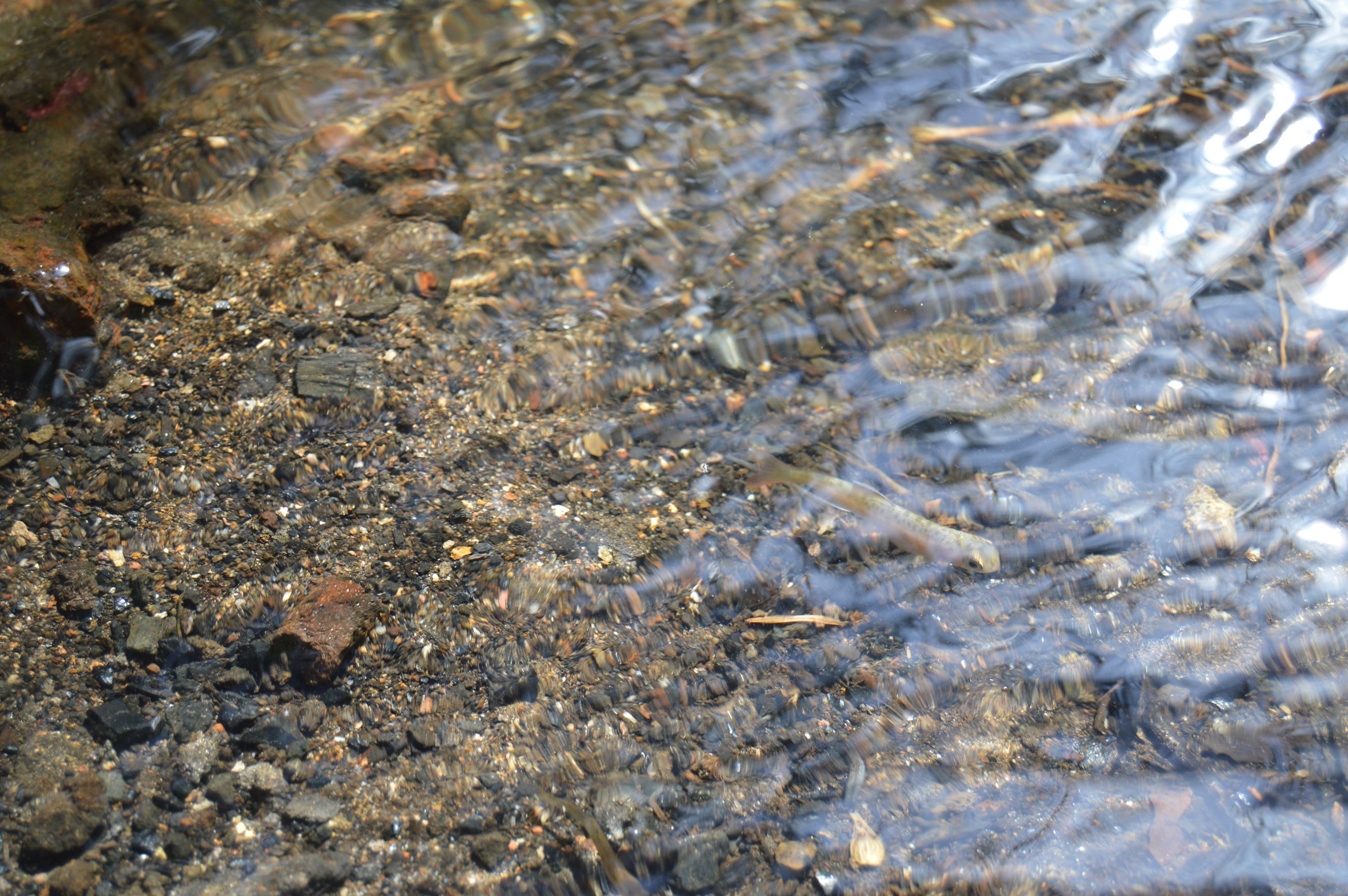
Can you spot the coho fry? In this life cycle stage, fry camouflage very well with the gravel and silt at the bottom of the creek, helping them to avoid predators.