Gary Allen is a local haying farmer from Lake Tapps. In recent years, he struggled with soil and hay health, resulting in fewer bales produced. Thanks to the assistance of one of our Farm Resource Specialists René Skaggs, Gary didn't just meet peak production numbers from his past "hayday", he exceeded them!
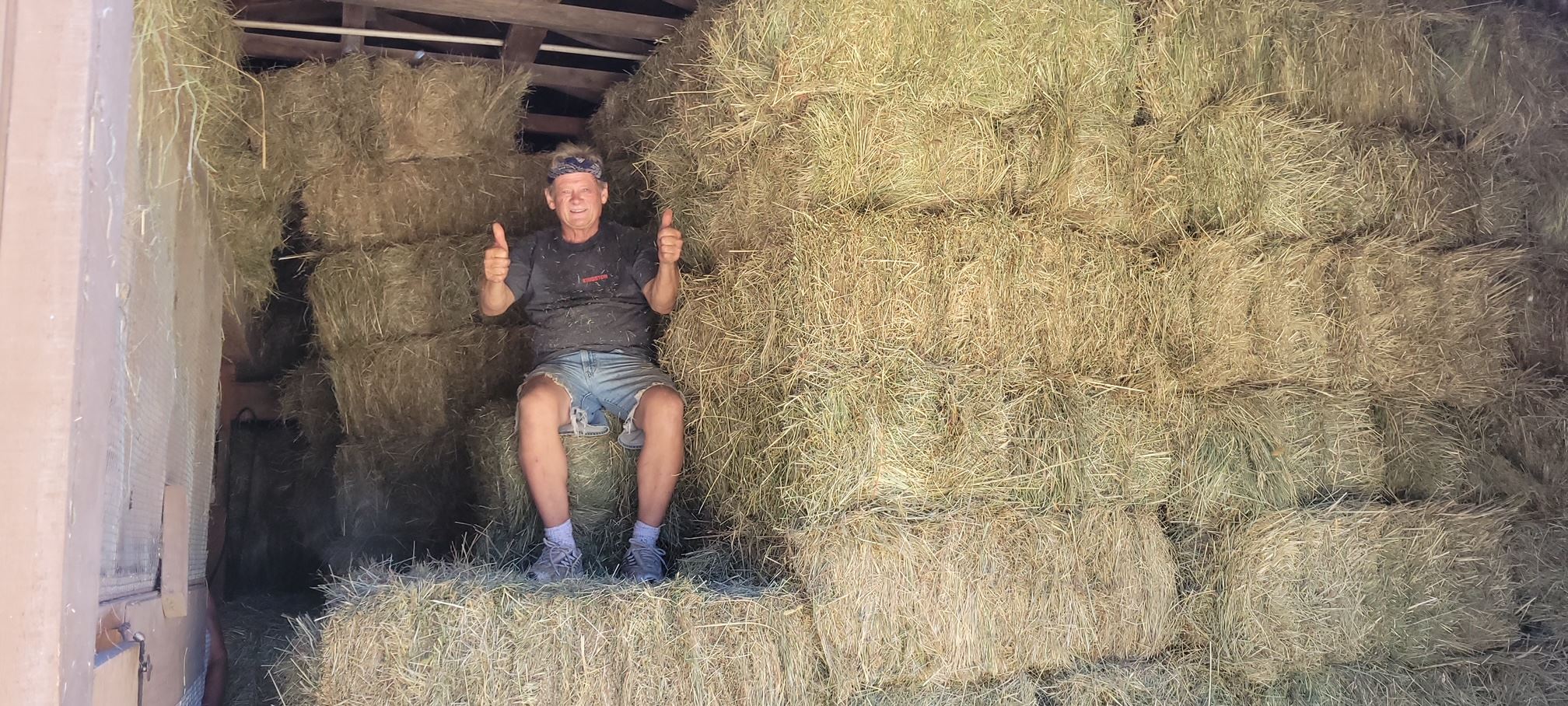
With all of Gary's success, you could say hay's on a roll!
From Neighbor to Friend: Passing the Farming Torch
About 31 years ago, Gary and his wife bought the 3-acre property they've inhabited since. Soon after moving in, the Allen household met their neighbors' beef cattle raisers that had been operating and haying since the 70s. This neighbor, Bob, and Gary's relationship bloomed over time.
At the time, Gary worked in IT as a big deal negotiator. Looking to commit to a passion that would provide a "break from reality", his attention turned towards haying. The Allens decided they wanted to start farming but had yet to purchase a cow. At one point, Bob needed to borrow Gary's truck for moving some things from the Dakotas. When Bob returned, he gifted Gary one of his pregnant cows in return for lending the truck. Thanks the two-way kindness between these neighbors, the Allens had the perfect haying head start!
As the years went by, the pregnant mother had babies, her babies had babies, and so on. However, land development increased, and Bob's operations decreased in size with that time passage. He eventually got down to about 10 acres.
Up until the end of Bob's career, Gary was a collaborator, supporter, and friend who ensured Bob had the help he needed. A huge way he helped Bob was by using his mechanic skills to fix up his 1950's John Deere tractor through the years. Thanks to his courtesy and tractor-fixing know how, that tractor survived until about 15 years ago. That neighborly support went both ways. Throughout Gary's decades of farming, every annual Allen hay harvest has been a community effort extending from family to neighbors. What started as a "break from reality" passion created an annual community hay harvest and pizza party tradition.
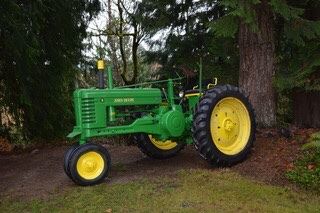
The 1950's John Deere Tractor that was retired in roughly 2010
Soil, Elk, and Hay Oh My!
When establishing his own haying practice, Gary knew that there wasn't much land nearby to use for haying. He and his wife sold a few of their rental properties to increase to the 14 acres of land they now manage. However, Gary's hay production started encountering issues as the years came and went.
About 5 to 7 years ago, Gary's hay bale production started decreasing in size. He also had to worry about another looming threat: elk! As the land development increased, the elk migrated over to Gary's undeveloped land. Unfortunately for Gary, that meant the elk mowed his hay down. He combatted this surprise attack with an over 3/4 of a mile and 7 foot tall electric fence to keep them out. While the elk were taken care of, he still had to deal with the issue of decreasing hay production. He threw fertilizer on the land to help, but it didn't seem to work.
Gary explained that as someone who did haying as his "break from reality", he wasn't certain what other steps to take moving forward. He decided to connect with the Pierce Conservation District Farm Team for agricultural assistance.
Implementing Best Management Practices
Farm Resource Specialist René Skaggs visited Gary's property about two years ago. His hay bale count had dropped to about 178 bales across 7 acres that year. After running soil analysis tests and evaluating other details of Gary's production, René shared a list of Best Management Practices he could use to improve his soil and hay health.
According to the pH tests, his soil pH level was extremely low. To adjust his levels so the pH would rise and stay, René suggested that he put down 14,000 pounds of agricultural limestone across his 7-acres. This would help increase his soil's pH and it was certainly expensive upfront. However, René explained that the residual of that investment would last several years down the road. Gary followed her advice, going on a long multi-stop trucking journey across our southern state line to Oregon to gather the lime he needed.
The soil also needed more fertilizer. While Gary already spread fertilizer in efforts to help the soil health, he did not do it based on soil test results- only by guessing. After taking soil samples for testing, René explained that the ground needed more fertilizer for it to really stick. He put down 6,000 pounds of fertilizer that year.
René suggested Gary put down more seed. He normally broadcasts a couple of hundred pounds a year, but René said for farmers like Gary who broadcast grass seed across their land, they would not get very good germination out of it because birds eat the seed up. He then rented our no till drill through Pierce Conservation District's equipment rental program to drill in 600 pounds of grass seed.
Finally, René advised that he cut his hay a few inches higher up the stalk to ensure the grass plants had nutrient reserves to re-grow. Gary described his initial reaction to this advice as hesitant, thinking it would lose some product, but still trusted her judgement.
This all looked to Gary like a lot of work to do and a lot of money to spend. While it was, Gary "knew he wanted it to be done right." He trusted that René's years of expertise meant that her guidance would rejuvenate hay production.
Un-bale-ievable Progress
Back during his peak hay production years, which was many years prior to René's visit, Gary got about 280-300 hay bales maximum. How was his production following implementing René's advice? The picture below shows the bale count on his baler.
In Gary's words, "It was pretty obvious by Spring that things were changing."
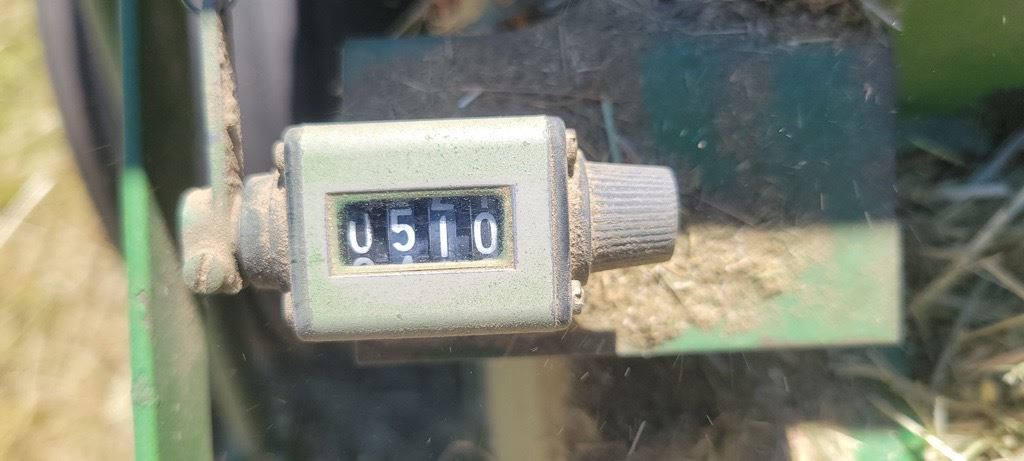
The bale count for Gary's hay production the following Spring
When describing how he felt seeing the counter hit 510, Gary said with a wide grin on his face,
"From 178 bales to 510 when the most I ever got was a very small 300 back in the day? It was huge. I couldn't ask for better results."
The hay count wasn't the only indicator of René's advice working. Gary also mentioned that the advice to cut the grass less close to the soil really paid off. Throughout all of his years haying, Gary's hay stalks tended to reach about waist level. However, some of the hay from the growing season following Best Management Practice implementation reached a height that stretched past the top of his head!
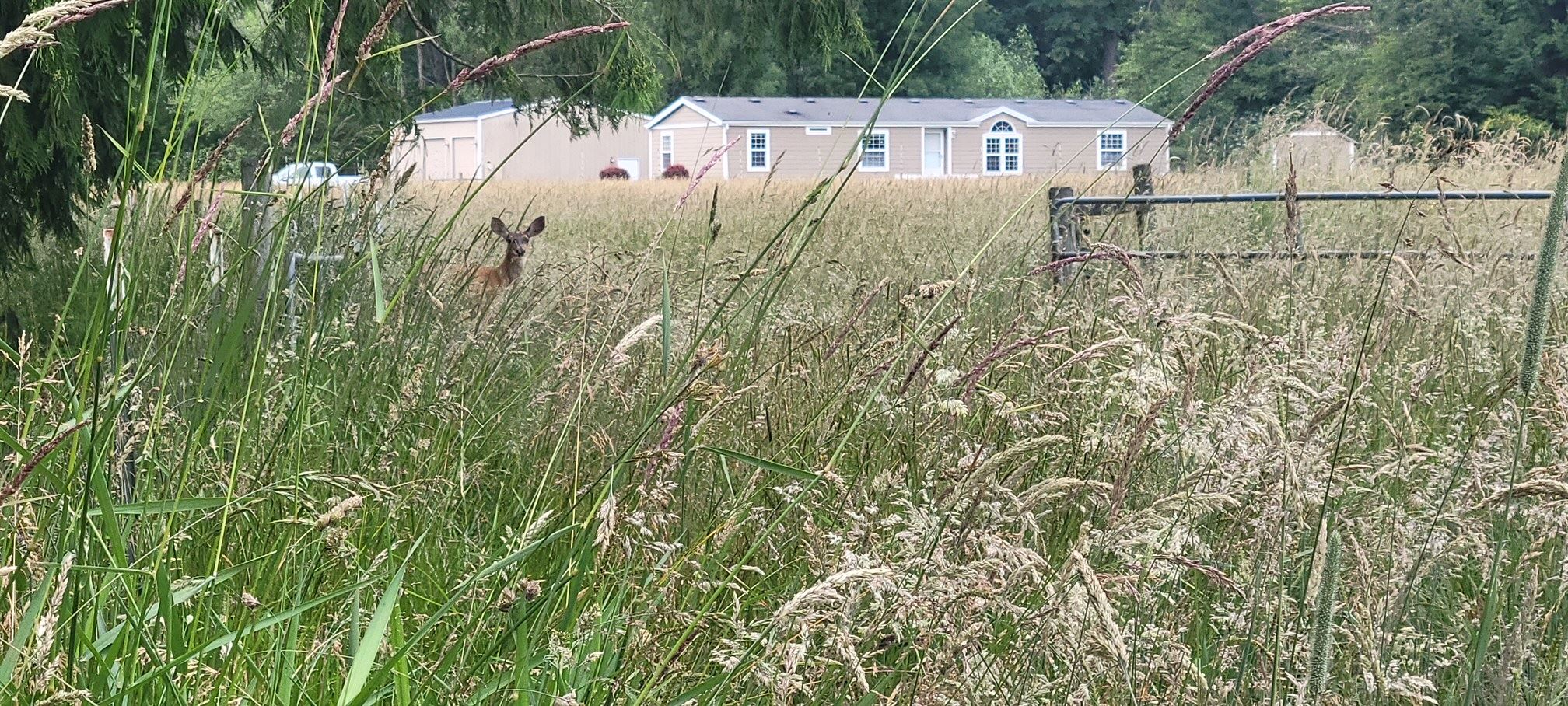
A deer stands and stares through the tall hay at the camera
Our farm team is thrilled that we could help Gary not just recover the hay production numbers he had many years ago but exceed them to set a new standard! Like with Gary and Bob's partnership and the community relationships so many other farmers uphold, a key part of farming is two-way road of community support.
We know that farming has its own set of challenges and questions as we live with and grow on the land. Best Management Practices benefit the land we live on and ensure that you implement long-term sustainable practices so your business can thrive.
Whether you're a new farmer, someone who farms as a "break from reality", or a long-term full-time farmer, our Farm Team is committed to meeting you where you're at and providing the guidance and resources you need!
If you need any assistance or advising, don't hesitate to contact one of our farm planners for advice that suits your unique situation. If you need to use any equipment on your land, you can rent a variety of farming equipment at this webpage.