Ryan Mensonides is a fifth-generation farmer who runs Providence Farms and Mount Rainier Creamery in Enumclaw, WA, and Mountain View Dairy in Graham, WA. With the help of Pierce Conservation District’s Rene’ Skaggs, the Mensonides family were able to finally complete some long hoped for Best Management Practices (BMPs) on their Graham farm, which he leases from Washington Farmland Trust after 6 years.
Ryan’s father originally ran a farm in Pierce County. However, Ryan decided to pursue a different career path in the dairy industry as a consultant. After spending some time near Fresno, California, he realized that instead of telling people how to run things, he should do it himself. He returned to Washington and rented a piece of property in 2012.
What Assistance Did Ryan Want?
PCD worked with the previous owner of the Graham dairy farm and helped them install many projects back in the early 90’s, but after the owner fell ill and leased the property out, many equipment pieces left the property.
One large reason for implementing Best Management Practices on the Graham farm property is water quality protection. Based on what Ryan and Rene saw, nutrient management was not necessarily happening at the right rate, place, and time due to a lack of infrastructure on the farm to spread the liquid manure material that accumulates from cleaning the barns that house replacement heifers and dry cows for his Enumclaw farm.
Ryan had to bring a big gun and reel liquid manure applicator and a lagoon pump over from his home farm located an hour away where the infrastructure is also needed. This potentially interrupted proper nutrient management on the home farm.
What Best Management Practices Did Ryan Implement?
Washington Farmland Trust was reimbursed for 90% of the costs for an irrigation big gun reel through a cost share program with PCD and NRCS (Natural Resources Conservation Services) so that Ryan could properly apply liquid manure onto his fields.
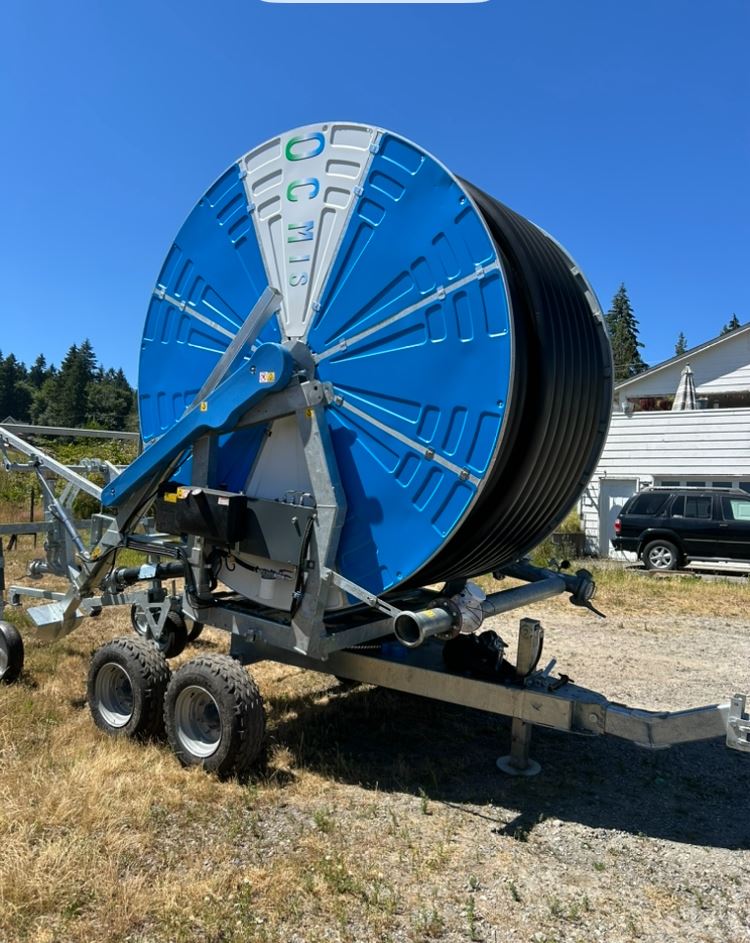
The blue irrigation big gun reel on Ryan's farm
An agitator pump was also purchased for the lagoon so that Ryan could apply liquid manure on fields to help grass grow. This helped to offset carbon and feed cows.
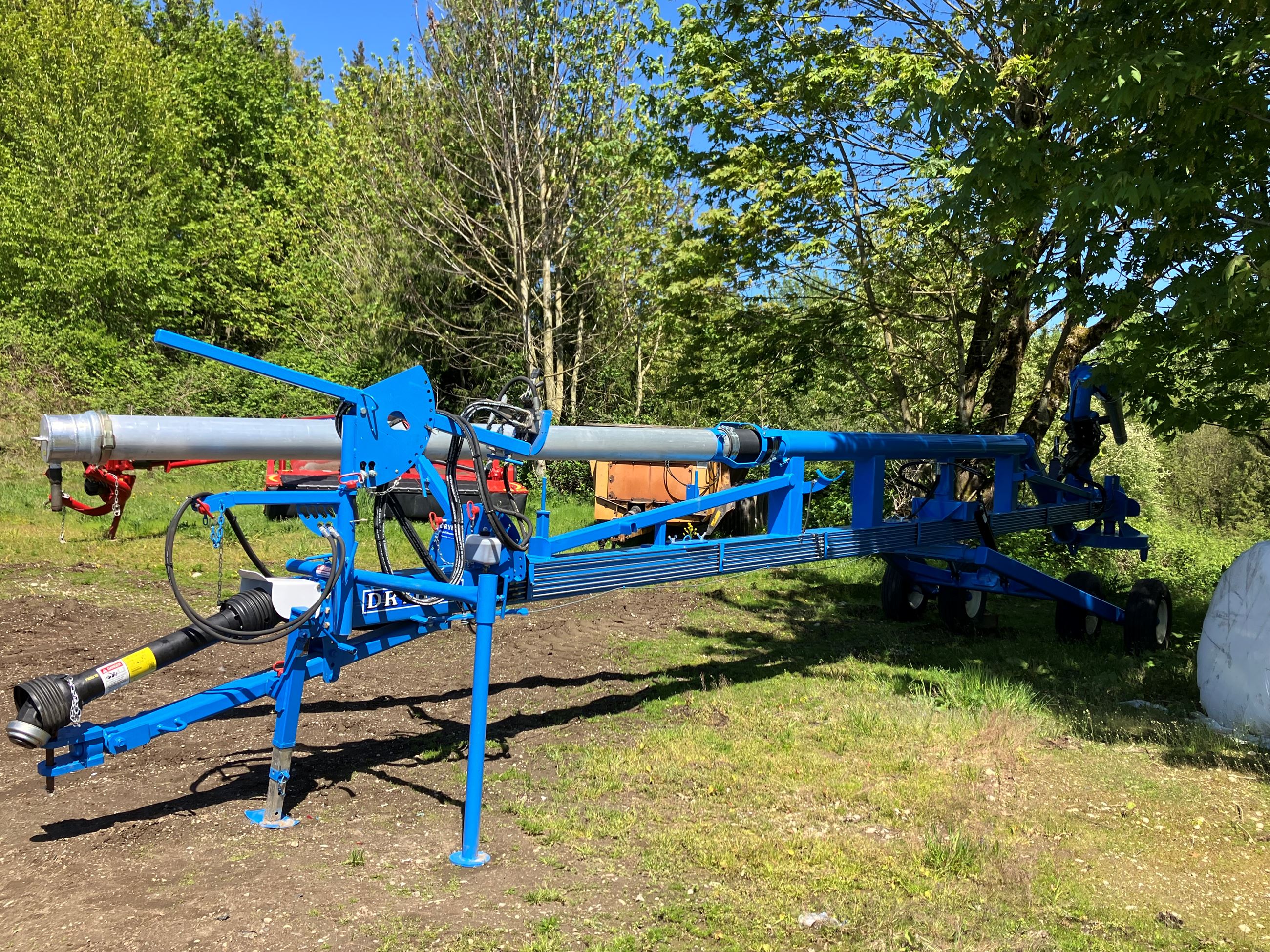
Agitator pump for Ryan's nearby lagoon
Through the WA State Conservation Commission’s Sustainable Farms and Fields program, PCD purchased pasture seed, peas and barley, to increase the forage production of the fields.
Finally, Ryan secured funding for liming through PCD’s Rates cost share program. The spreading of agricultural lime across soil, which is made from pulverized limestone, helps farmers increase pH of the soil which supports grass growth.
Reflecting on the Present
Farmers, especially local and small-scale farmers, have to be intentional with the money they spend. Farming is not a profession known to bring in “the big bucks”. “It’s hard to try new things when you don’t have flexibility with money,” Ryan noted.
“Being able to get cover crops and being able to work through that with the Conservation District allows us to figure out the practices that are gonna have long term sustainable effects on the farm.”
Ryan remarked how supported he felt thanks to Rene’s hard work. While he said that it could be hard to find an organization or resources to support farmers, he felt persistence and support from Rene and the Conservation District over the past 6 years. “Given the fact that she’s had such a long tenure, she can get stuff done when others might not have that experience, so as a farmer that’s been awesome.”
During the 6-year process of trying to get a center pivot for his farm, securing funding for that equipment came with hurdles and frustration. Yet through all of it, Ryan mentioned that when he was ready to change course or had very little time, Rene stayed by his side and continued to fight for the assistance he needed.
It's not easy to perservere. Ryan noted that farmers may run out of time and patience. It was hard for him to keep probing, find what he needed, and stay on task with all the deadlines. “To have Rene - in a good way- bugging me about deadlines and different things, that was really helpful, and I appreciated it.”
Looking to the Future
Given where he is now, he's excited for the future. He’s already felt the benefit of some of his Best Management Practices because he can keep up with manure application now and thanks to the reel, he wastes less of the seed that he sourced from PCD. He looks forward to non-drought years when he can reap the rewards of his BMPs to the fullest.
The next plan in Ryan’s farming future is to get an electric manure pump, but for now Ryan is in the process of exploring what works moving forward. As a farmer that works on a tight budget, he’s grateful that the Conservation District’s resources and planning assistance provides him with an ability to try new things.
The implementation of BMPs on farms can take weeks, months, or even years. Still, the result of implementing BMPs on farms help natural resource use, but also helps with cost and time efficiency for farmers. Regardless of how long it takes to implement BMPs, Pierce Conservation District is committed to ensuring that farmers are supported throughout the process.
Conservation Districts have been a source of guidance and equipment support for farmers since the dust bowl era. We know that farmers work on a budget, so we want to ensure that they can use natural resources in the most cost, time, and ecologically efficient way.