Water Quality Improvement

Read the latest from the Water Quality Improvement team.

Nov 25

Green Tacoma Day 2025: A Day of Community Action to Create a Greener City

Posted on November 25, 2025 at 10:30 AM by Gracie DeMeo

By Kayla Kunimoto

On October 11, 2025, Tacoma celebrated its annual Green Tacoma Day. Volunteers and partnering organizations gathered for an intentional day of community action to support local urban green spaces. Over three hours Tacoma took a large leap towards becoming a greener city.
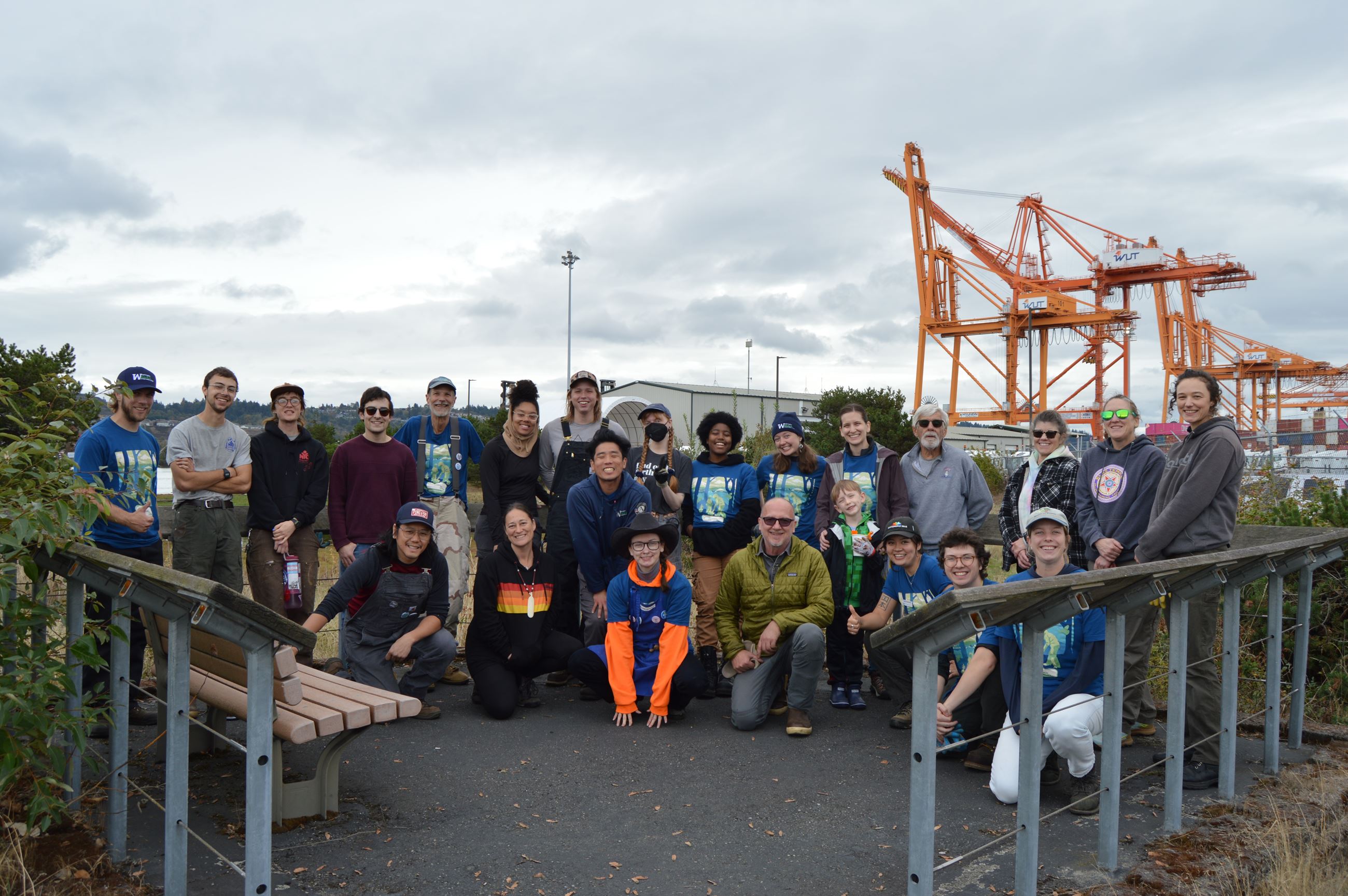
Large group of volunteers posing for the camera at the Port of Tacoma

Volunteers at one of the Green Tacoma Day 2025 sites: qwiqwelut Salt Marsh, next to the Port of Tacoma.

Our Impact

This year, the Green Tacoma Partnership had 223 volunteers gather across 13 different sites to show their support. Volunteers took part in a range of activities, such as tree giveaways, tree and shrub plantings, litter pick-up, and habitat restoration. We’ll let the numbers speak for themselves:

  • 171 trees and 533 understory plants installed
  • 197 trees given away
  • 6,050 sq ft of weeds removed
  • 6,857 sq ft mulched
  • 3,291 gallons of trash, debris, and recycling removed

In total The Green Tacoma Partnership tallied 505 volunteer work hours. That’s the equivalent of a person working full time for over three months!

Why Green Tacoma Day?

The Green Tacoma Partnership was formed in 2005 as a joint effort between different government organizations, schools, non-profits, businesses, and community to promote healthy urban natural areas for all. Caring for green spaces is an investment for both the local community and the wildlife that depends on them. Every tree planted and weed pulled helps to strengthen the city’s resiliency in the face of climate challenges to create healthier urban forests. These spaces filter stormwater, reduce flooding, improve air quality, sequester carbon, create habitat for wildlife, and regulate temperature during hot weather. The benefits extend to an improved quality of life as well, by providing recreational opportunities and promoting better mental health and wellbeing. Greener neighborhoods provide a feeling of safety and comfort to communities.

Green Tacoma Day is an opportunity for people to get involved in protecting and caring for their urban forests. Although we reside in the Evergreen State, Tacoma has the lowest tree canopy percentage compared to all other communities in the Puget Sound Region. Currently, the city’s tree canopy percentage sits at 21%, with a goal to reach 30% by 2030.
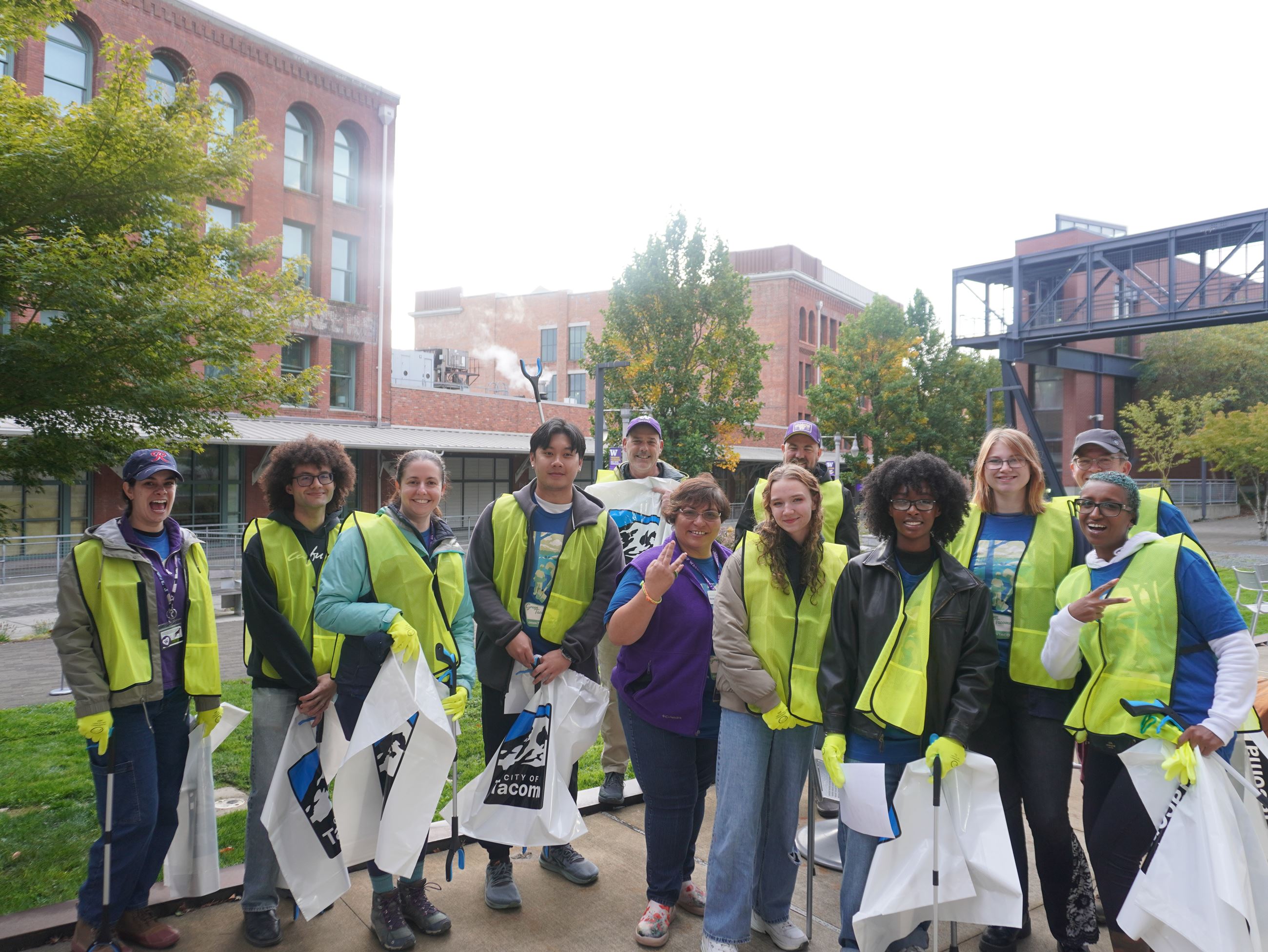
A group of volunteers with trash bags and grabbers posing for the camera

Student volunteers from UWT are ready to collect litter from around campus and downtown.

While improving any green space is vital, it’s important to acknowledge that there are areas that should be prioritized due to fewer trees, less shade, and more exposure to stormwater runoff and air pollution. Green Tacoma Day seeks to focus on areas that need it most. Sites like qwiqwelut “Little Marsh” near the Port of Tacoma, is in a location that has been heavily industrialized and much of the original habitat has been lost. Alongside the port, Central and South Tacoma also face lower canopy coverage compared to other areas. Programs such as Green Blocks seek to support specific neighborhoods that would especially benefit from tree plantings.
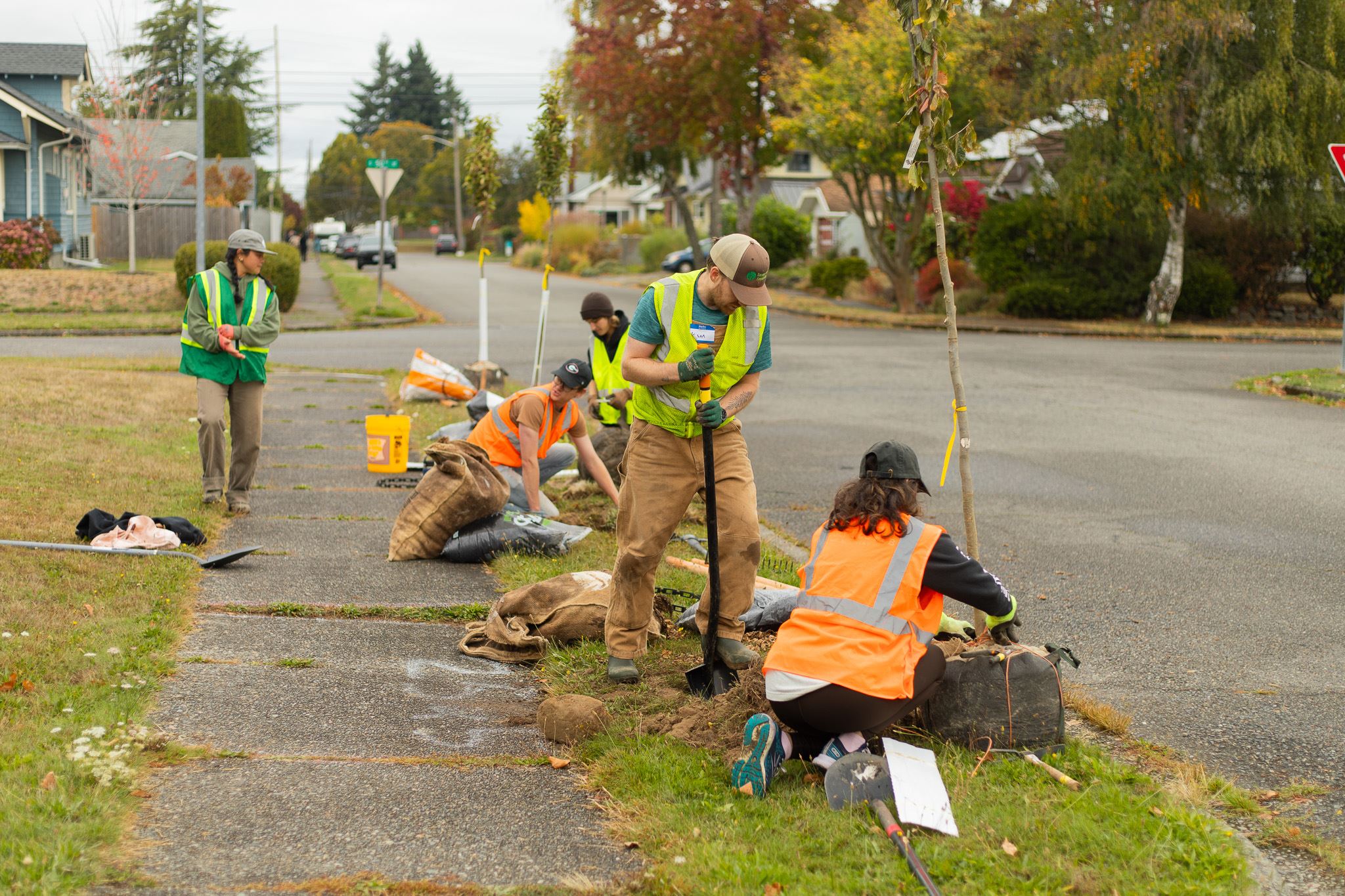

Volunteers in high visibility vests helping to plant a tree in a suburban neighborhood.

Green Blocks volunteer tree planting event, hosted by Tacoma Tree Foundation and City of Tacoma Urban Forestry.

What's Next?

Green Tacoma Day 2025 may be over, but there are many opportunities to get involved and continue to improve Tacoma’s natural spaces. The Tacoma Habitat Stewardship Program is designed to allow the public to easily get involved in the restoration of urban natural areas in Tacoma. Currently, there are four sites that have monthly volunteer work parties to restore habitat and educate the community on best management practices. This is a great way to build friendships, hang out, learn, or just let loose with hands-on work! All ages are welcome, no skills are necessary, and all tools are provided. You can register for a work party on Pierce Conservation District’s Calendar of Events.

The Tacoma Habitat Stewardship Program has sites that are also available to host private events, workshops, or corporate outings. If you have any questions about partnering with us, please contact tacomahabitatstewardship@piercecd.org. You can also follow the Green Tacoma Partnership on Instagram and Facebook, to get updates on events that our fellow partners will be hosting.

See you all at Green Tacoma Day 2026!
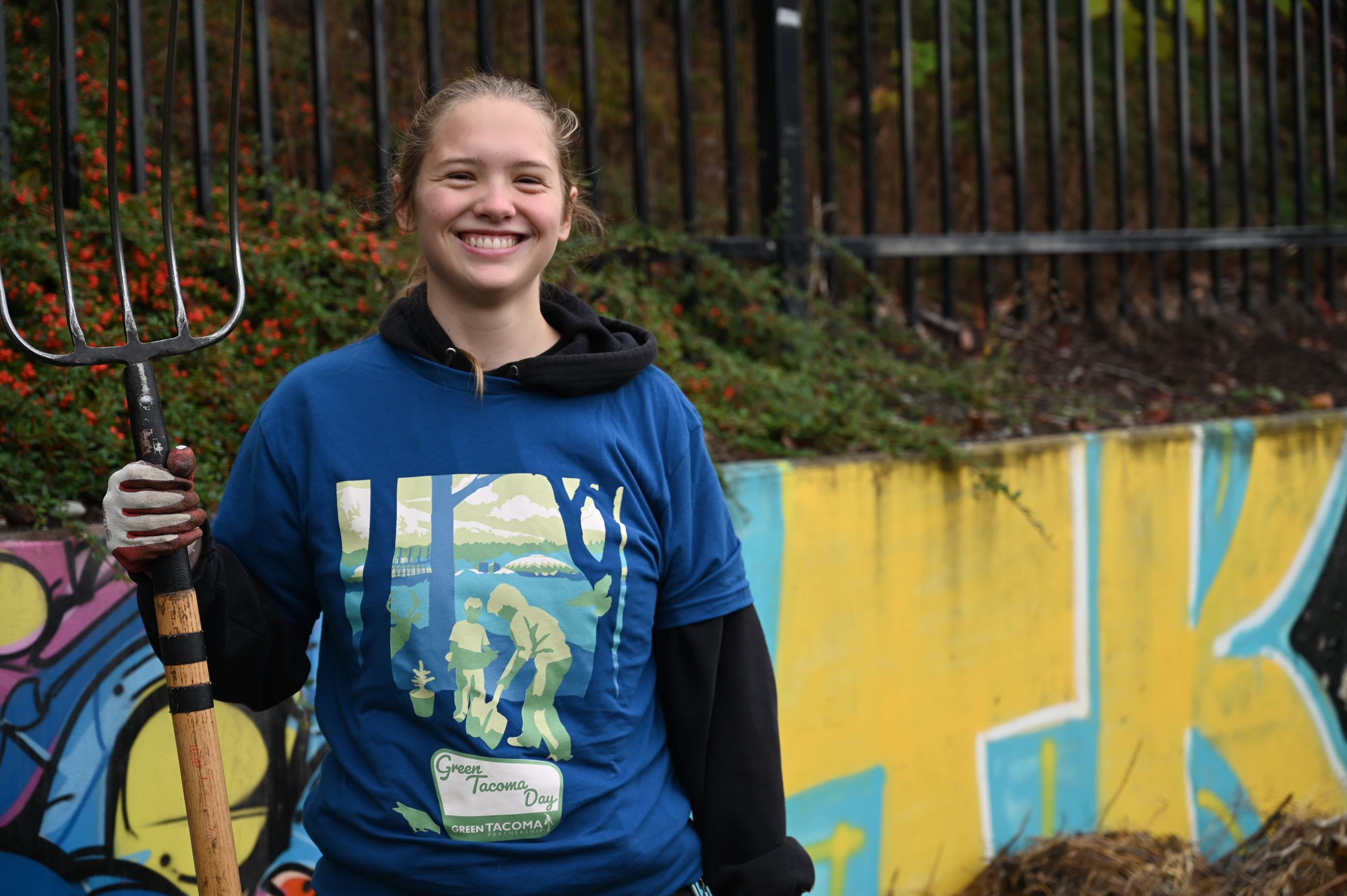
a volunteer wearing a green Tacoma day shirt posing with a pitchfork and smiling at the camera

Volunteers at S 72nd St and S D St, “Tacoma’s Skinniest Park”, doing upkeep and plantings.

Special thanks to the partners that comprise the Green Tacoma Partnership, who made this event possible: City of Tacoma (Open Space, Urban Forestry, and Tidy Up), Pierce Conservation District, Parks Tacoma, Tacoma Tree Foundation, Washington State University, University of Washington Tacoma, Clover Park Technical College, Tahoma Bird Alliance, South End Neighborhood Council, Pierce County Parks, and Washington Conservation Corps.

Oct 28

Breathing New Life Into a Local Puyallup Green Space

Posted on October 28, 2025 at 10:17 AM by Gracie DeMeo

by Kathryn Barlow

Volunteers working on a strip of dirt at Dead Man's Pond in Puyallup.


Tucked into a quiet pocket near Puyallup’s suburban edges along the Puyallup loop trail lies a small patch of forested wetland called Deadman’s Pond. Although its name conjures ghost stories, Deadman’s Pond is teeming with life. One of the pond’s most remarkable residents rarely draws attention. The western pond turtle, (Actinemys marmorata) is a shy, slow-moving native reptile that has become a symbol of resilience in the face of habitat loss and invasive threats.

The western pond turtle has faced dramatic declines over the past century due to urban development, loss of habitat, invasive species like bullfrogs eating juvenile turtles, and overgrowth of invasive vegetation preventing nesting and movement. Today, this loveable turtle is listed as a state-endangered species and identified as a species of greatest conservation need under Washington’s State Wildlife Action Plan.

But there is hope tied to places like Deadman’s Pond.

Why Deadman’s Pond Matters

Deadman's Pond is a vital piece of a much larger conservation puzzle. This site offers slow, muddy waters and quiet upland forests that western pond turtles need to thrive. They bask on logs in the summer, overwinter in leaf litter and woody debris, and seek open, sunny nesting areas each spring. 

Restoration work at Deadman's Pond supports the broader statewide recovery effort led by WDFW and Woodland Park Zoo, which has been in progress for over three decades. Over 800 turtles have been raised in captivity during their early vulnerable years and released into protected wildlife areas as adults. Through these efforts, they have successfully established sustainable populations in the Puget Sound and Columbia River Gorge areas.

A western pond turtle with its front legs up.

A juvenile western pond turtle. Photo courtesy of WDFW.

Getting Our Hands Dirty (So Turtles Don’t Have To)

With critical habitat around Deadman’s Pond now owned by the City of Puyallup, restoration work to remove invasive species and plant native species in their place is essential to moving toward the reintroduction of western pond turtles to the area.

Volunteers and local partners are actively removing invasive vegetation that blocks potential nesting sites and restoring degraded habitat though the planting of biodiverse native species in areas to ensure that turtles have the room they need to move, burrow, nest, and thrive.

Every action counts and every pair of hands makes a difference.

Whether you're a lifelong resident, a student looking for hands-on experience, or simply someone who wants to spend more time outdoors while giving back, there’s a role for you as a volunteer at Deadman’s Pond.

How Can You Help?

Learn more about upcoming volunteer events and restoration work parties on our Calendar.

You can also sign up groups of volunteers, like boy scout groups or school clubs, by filling out the group interest form on our Volunteer Opportunities Page.

Have questions about Deadman's Pond specifically? Contact our Habitat Stewardship Program Manager, Bryan Mohlman

Jul 30

Pierce Conservation District Hunts For Bugs!

Posted on July 30, 2024 at 10:15 AM by Gracie DeMeo

by Bryan Mohlman

Two volunteers assisting PCD in catching macroinvertebrates with a drop net at a creek.

A pierce county worker and employee searching a local creek.

Pierce Conservation District continues its partnership with Pierce County’s Surface Water Management team to gather bugs in some creeks in the County.

Why are we looking for bugs? Water quality scientists sample “macro-invertebrate” populations as one factor to determine how healthy a body of water is. As the name would suggest, macro-invertebrates are larger species that can be seen without use of a microscope. Examples include mayflies, stoneflies, and caddisflies.

Macro-invertebrates are key indicators of stream health. Different groups of macro-invertebrates react strongly to pollited waters, acting as the proverbial canary in the coal mine. Low populations can signal the presence of certain toxins or pesticides, while high populations can indicate a healthy stream capable of supporting wildlife.

Pierce Conservation District and Pierce County typically focus monitoring efforts start in July and continue through August in correspondance to fish population fluctuations. We encourage volunteers to join us, especially if you want to get hands-on experience with restoration monitoring in the summer.

If you’d like to get more information about the data collected, the process, or how to get involved in future efforts please feel free to reach out to our Habitat Stewardship Program, Bryan Mohlman.